
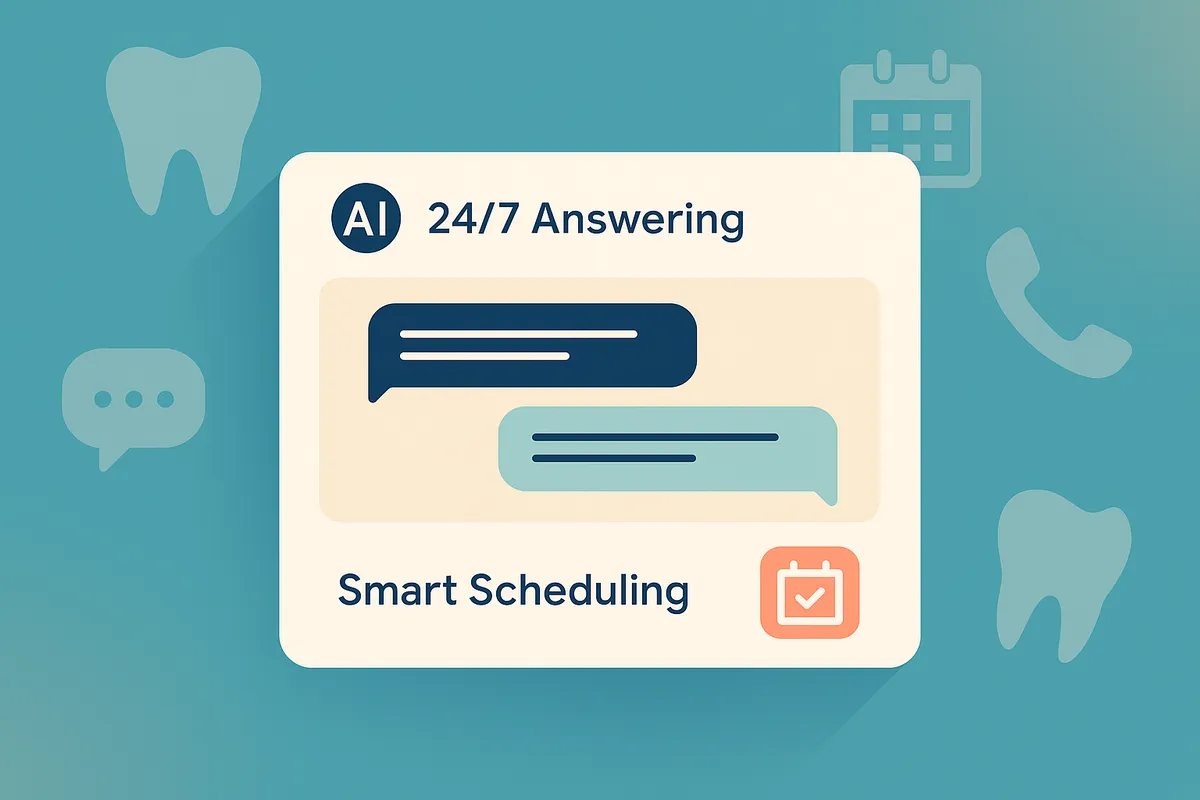
The Shift to AI-Powered Patient Communication
Dental front desks juggle phones, scheduling, and in-office patients at the same moment, and the phone is usually the first thing to lose. Conversational AI takes the calls a busy team can’t reach, books the appointment while the patient is still on the line, and hands anything complicated to a person.
The Rise of Conversational AI in Dentistry
Dental clinics are under increasing pressure to deliver faster, more efficient patient communication—without burning out their front desk teams. That’s where conversational AI is making a powerful impact.
Using natural language processing and automation, conversational AI allows clinics to handle calls, book appointments, and answer FAQs—all without human involvement. It operates 24/7, ensuring no patient call goes unanswered, even after hours or on weekends.
With rising patient expectations and limited staffing options, clinics are turning to AI not to replace humans, but to support them—by offloading repetitive tasks and improving the patient experience.
The American Dental Association keeps a resource page on artificial intelligence in dentistry if you want the profession’s own starting point before talking to vendors.
5 Key Benefits of Implementing Conversational AI
1. Enhanced Patient Engagement
AI systems answer in under a second, so no caller waits on hold. By handling routine questions and appointment scheduling, they leave staff free for in-person patient care.
The same plan includes a website chatbot that books, reschedules and cancels into your practice management system and answers questions the way the voice AI does, so a patient who would rather type than call gets the same service.
2. True 24/7 Availability
With AI-powered tools, dental clinics can offer round-the-clock support, ensuring that patient needs are addressed promptly, even outside of regular office hours.
This matters because:
- Patients call when it suits them, which is often when the office is closed. Your call log shows how many; we have not found a dependable published share to quote
- Emergency inquiries can be triaged on your protocol at any time
- New patient calls are captured instead of going to voicemail (and often, to a competitor)
Learn more in our ultimate guide to AI answering services for dental practices.
3. Operational Efficiency
Automating routine calls, follow-ups, and data entry reduces administrative workload and the errors that come with retyping. In practice that means:
- Routine calls (hours, insurance accepted, booking, rescheduling) are resolved without a staff member picking up
- Outbound calling and SMS follow-ups are part of the plan, so confirmations and short-notice openings can be worked without staff time
- Bookings are written straight into the PMS, so there is no second entry
- Every call comes with a transcript and summary, and a dashboard lists all calls
4. Cost Savings
Covering the phones with people costs a salary. The U.S. Bureau of Labor Statistics reports a median of $38,010 a year for receptionists (2025), before benefits, payroll taxes and training. That is a general figure, not a dental one, and dental offices in high-cost areas often pay more.
GetHelpdesk.AI is $399 a month, about $4,800 a year, with up to 600 inbound calls a month included. It also covers hours a salaried person can’t, such as nights, weekends and lunch breaks. Whether it replaces a hire or simply stops you needing one depends on your call volume, and the saving depends on what a missed call costs you today.
For a detailed breakdown, see our AI vs. receptionist cost comparison.
5. Consistent Patient Experience
Every patient receives the same professional, friendly interaction—regardless of how busy the office is, what time they call, or how many other calls are coming in simultaneously.
This consistency builds patient trust and reinforces your practice’s reputation for reliability.
Why Choose GetHelpdesk.ai?
While several providers offer conversational AI solutions, GetHelpdesk.ai stands out for its tailored approach to dental practices. Our platform offers:
Seamless Integration
Easily integrates with existing dental practice management systems, including:
Customizable Workflows
Adaptable to the unique needs of each clinic, ensuring personalized patient interactions that match your practice’s voice and protocols.
Call Visibility
A dashboard of all calls, with a transcript and summary for each, shows call volumes, peak times, and common inquiries, which helps with decisions about staffing and hours.
DSO Compatible
The product is DSO compatible, so a single-location practice and a multi-site group use the same setup.
What Practices Are Seeing
Across GetHelpdesk.AI locations, the system has answered more than 77,000 patient calls and booked more than 6,300 appointments, with 45 locations active in the last 30 days. Those are platform totals, not a promise for any one practice. What a given practice gets depends on its call volume, how many calls it misses today, and the value of the cases it books.
Key Takeaways
- Conversational AI answers every call, so patients who would have reached voicemail get a booking or an answer
- 24/7 availability captures new patients who would otherwise call another practice
- Automation of routine tasks frees your team to focus on high-value patient interactions
- Cost is a flat $399 a month, which you can set against a salary or against what missed calls cost you
- Integration with your existing PMS keeps bookings in one place without disrupting operations
Frequently Asked Questions
What is conversational AI, and how does it differ from a chatbot?
Conversational AI uses advanced natural language processing to understand context, handle complex queries, and maintain natural dialogue—much like a human conversation. Basic chatbots follow rigid scripts and often frustrate users. GetHelpdesk.ai’s conversational AI can understand intent, handle follow-up questions, and even detect urgency in patient requests.
Will patients know they’re talking to AI?
We recommend transparency. Most patients appreciate knowing they’re interacting with AI, especially when it provides faster service. Our AI introduces itself appropriately, and patients always have the option to request a human callback for complex matters.
How does conversational AI handle emergencies?
Our AI is trained to recognize emergency situations and escalate appropriately—either by transferring to on-call staff immediately or providing emergency instructions while documenting the situation for follow-up.
What about patients who prefer talking to humans?
Conversational AI complements your team; it doesn’t replace them. Patients who prefer human interaction can always request a callback, and the AI seamlessly hands off to staff when needed. Many practices find that most routine inquiries are handled happily by AI, freeing staff time for patients who need that personal touch.
How quickly can we implement conversational AI?
Most practices are taking live calls 5 to 7 days after kickoff. That covers the connection to your PMS, configuring responses to match your practice, and showing your team how to review transcripts. It goes faster when your scheduling rules and emergency protocol are already written down.
Ready to Transform Your Patient Communication?
If missed calls, hold times or front desk overload sound familiar, a demo on your own scenarios is the quickest way to judge whether conversational AI fits your practice.
👉 Schedule a demo to hear how it handles your patients’ calls.
Sources
- Receptionists, Occupational Outlook Handbook, U.S. Bureau of Labor Statistics
- Artificial Intelligence in Dentistry, American Dental Association
- GetHelpdesk.AI plan details and platform totals come from our pricing page and our own call records.
Related Posts
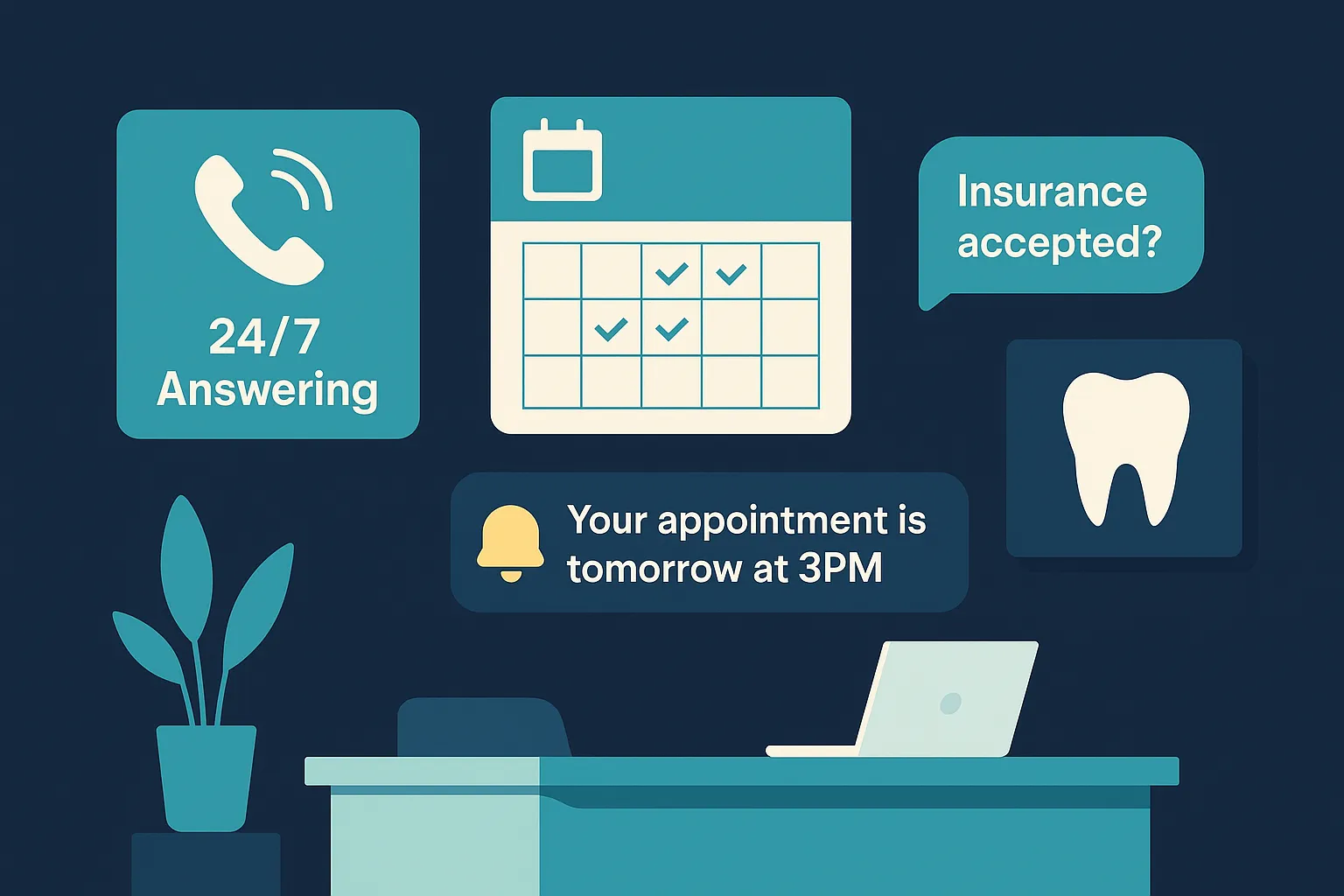
Solving Dental Staffing Shortages with AI
More than half of dentists recruiting front office staff call it very or extremely hard. What AI can take off a stretched team, and what it hands back.
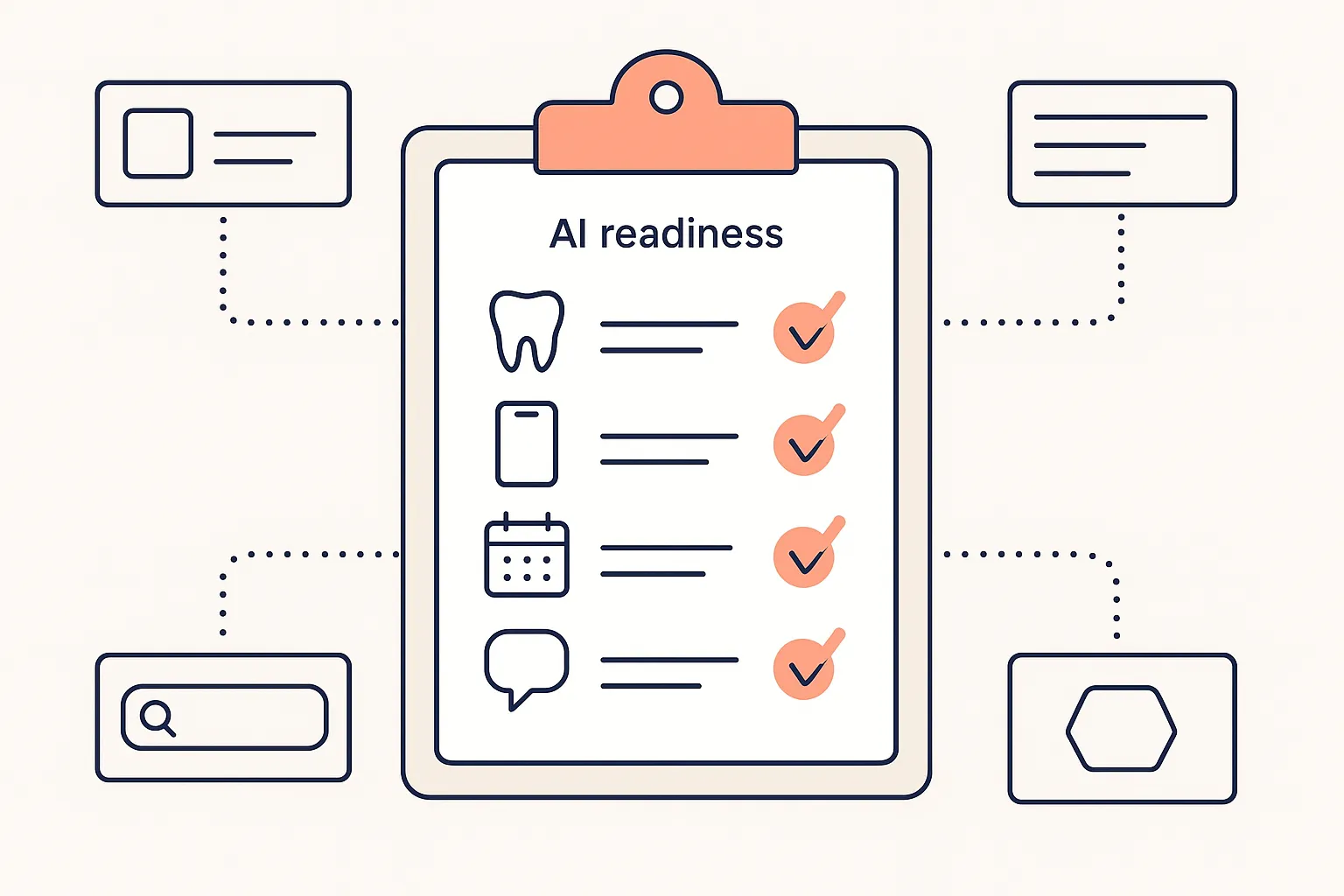
AI Readiness Checklist for Dental Practices
Do calls like "Do you accept Delta Dental?" fill your phones? This AI readiness checklist for dental practices covers routine calls, staff time and your PMS.
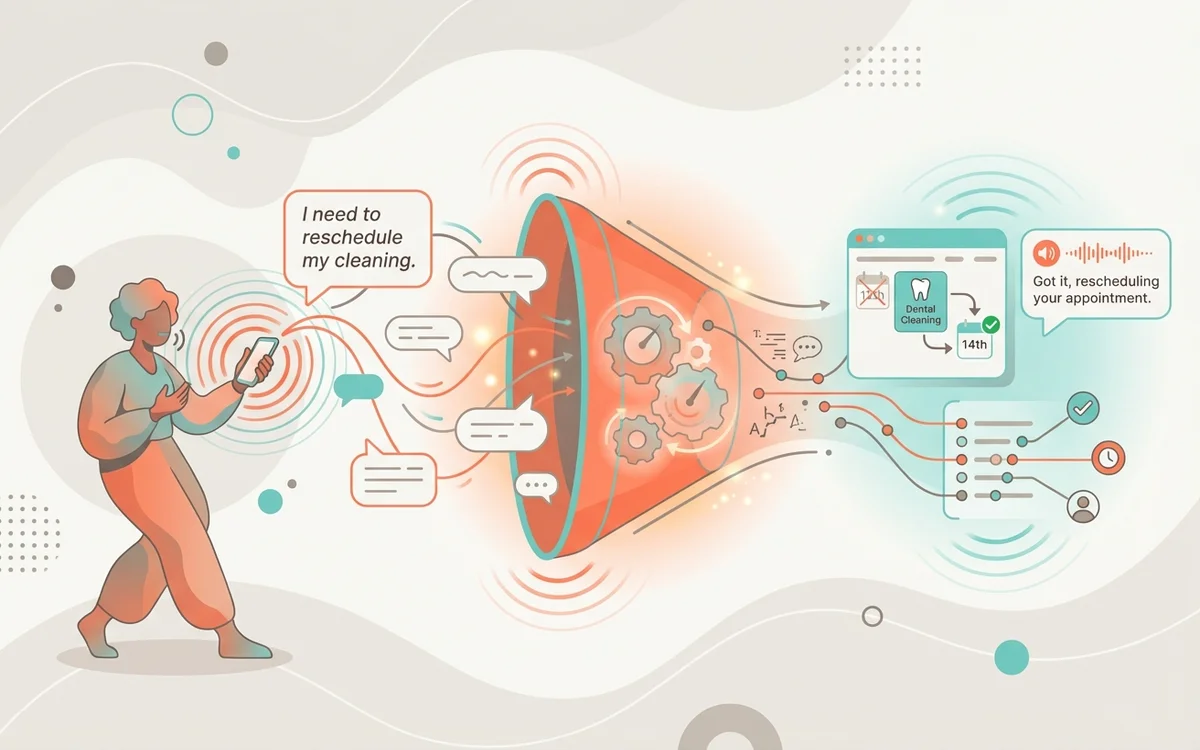
How NLP Powers AI Dental Assistants, Explained
"I need a cleaning next Tuesday with Dr. Smith" holds three entities. How NLP turns patient phone calls into booked dental appointments, in plain language.