
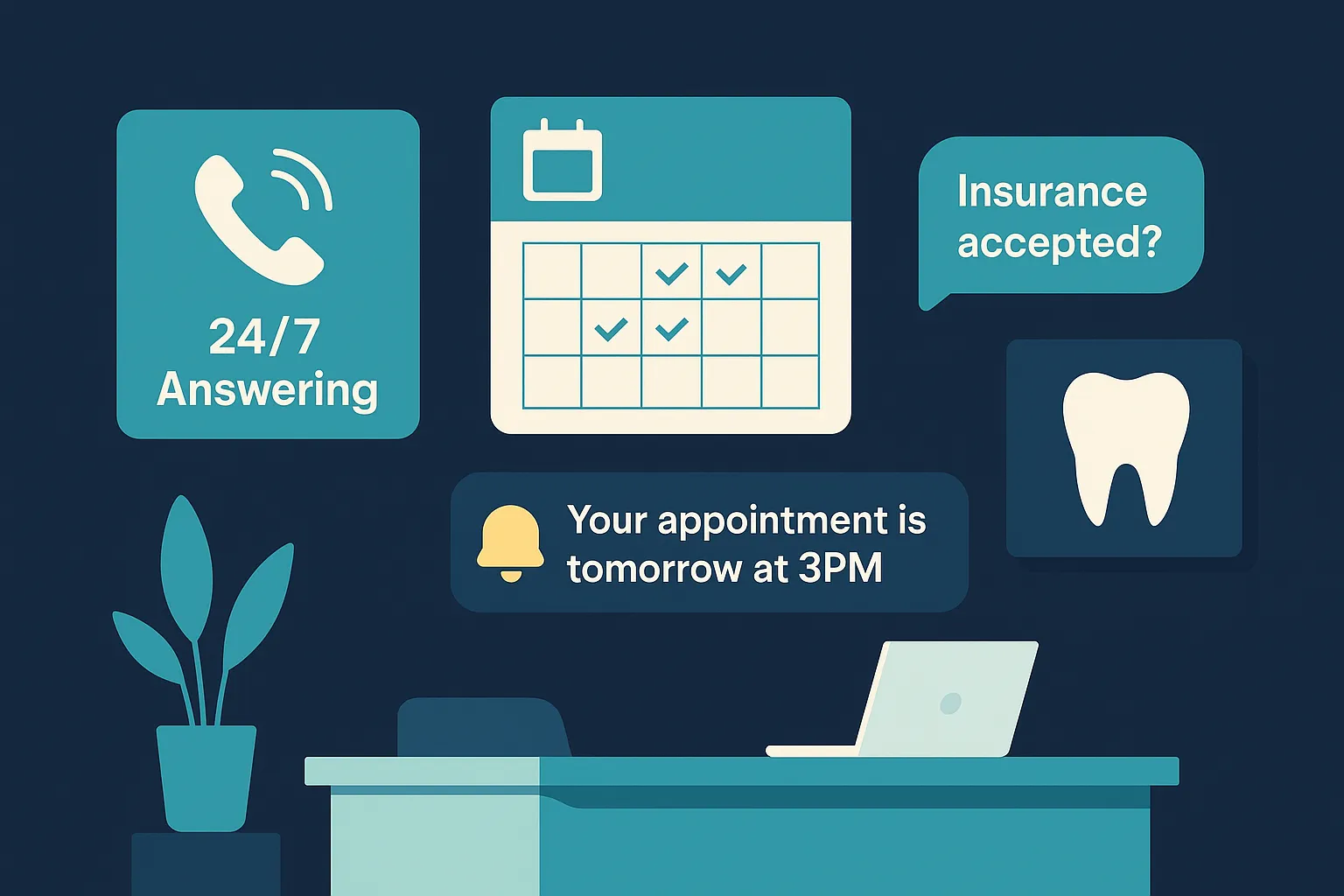
The Staffing Crisis Hitting Dental Practices
Staffing shortages continue to challenge dental practices across the U.S., leading to heavier workloads, patient delays, and operational inefficiencies. While hiring and retention remain long-term concerns, AI-driven technology is becoming a powerful, immediate solution for dental teams looking to stay efficient and patient-focused.
According to the American Dental Association Health Policy Institute, over 70% of dental practices report difficulty recruiting qualified front office staff. The shortage has intensified since 2020, with many practices operating with fewer team members than needed to maintain optimal patient care.
The result? Overwhelmed teams, missed calls, longer patient wait times, and revenue slipping through the cracks.
The Real Impact of Staffing Gaps in Dental Offices
When front desk staff are overburdened or understaffed, the consequences ripple throughout your practice:
Missed Calls and Lost Revenue
When phones go unanswered, potential patients call the next practice on their list. Studies show that 34% of dental calls go unanswered during peak hours. Each missed new patient call represents $500-1,500 in lost first-year revenue.
Overwhelmed Teams
Dental staff are forced to multitask—juggling admin duties, scheduling, patient check-ins, and phone calls—often leading to burnout and turnover. The cost of replacing a single front desk employee can exceed $5,000 when accounting for recruiting, training, and lost productivity.
Inconsistent Patient Experience
Long response times, manual errors, or forgotten reminders hurt your brand and patient trust. In healthcare, inconsistency doesn’t just frustrate patients—it can lead them to question the quality of care they’ll receive.
These challenges are not just inconvenient—they cost time, money, and reputation.
AI to the Rescue: A Smarter Front Desk Assistant
GetHelpdesk.ai is purpose-built to support dental practices with smart, automated solutions that reduce dependency on manual staff input and improve workflow continuity. Here’s how:
24/7 Intelligent Answering Service
Never miss a call again. AI answers patient inquiries day or night, helping your practice remain responsive and professional—even outside office hours.
The AI can:
- Answer common questions about hours, location, and services
- Provide information about insurance acceptance
- Capture new patient information for follow-up
- Triage urgent vs. routine calls appropriately
Automated Real-Time Appointment Scheduling
Patients can schedule, reschedule, or cancel appointments on their own through a conversational AI interface—no back-and-forth phone tag or missed slots.
This automation:
- Reduces scheduling-related calls by up to 60%
- Eliminates double-booking errors
- Syncs directly with your practice management system
Streamlined Patient Onboarding
AI collects intake information before the visit, reducing paperwork at the front desk and improving visit flow. Patients appreciate completing forms at their convenience rather than arriving early to fill out clipboards.
Reminder and Follow-Up Automation
Automatic reminders via SMS, email, or voice reduce no-shows and keep patients engaged in their treatment plans. Practices using automated reminders see no-show rates drop by 25-40%.
Instant Insurance and FAQ Support
Your AI assistant can answer routine questions about accepted insurance plans, services, hours, and directions—taking the load off your front desk and ensuring patients get instant answers.
Why Dental Practices Are Choosing AI
The numbers make the case compelling:
| Metric | Impact with AI |
|---|---|
| Administrative cost savings | Up to 40% |
| Weekly hours saved per staff member | 3-5 hours |
| Call answer rate improvement | From 65% to 95%+ |
| No-show rate reduction | 25-40% |
| Patient satisfaction increase | 20-30% |
This is more than automation—this is practice transformation. And with dental software integrations that connect to your existing tools, adoption is seamless.
AI That Feels Human
At GetHelpdesk.ai, we’ve designed our conversational AI to sound natural, friendly, and empathetic—built specifically for the dental world. Your patients won’t feel like they’re talking to a robot. They’ll feel heard, supported, and valued.
Key features that make the difference:
- Natural language understanding that handles variations in how patients ask questions
- Empathetic responses for anxious patients or sensitive situations
- Seamless handoff to human staff when complexity requires it
- Customized vocabulary for your specific practice and services
Getting Started: Your AI Implementation Roadmap
Implementing AI doesn’t require a complete overhaul. Here’s a phased approach:
Phase 1: After-Hours Coverage (Week 1-2)
Start by having AI handle calls outside business hours. This immediately captures new patient inquiries that would otherwise go to voicemail.
Phase 2: Routine Call Handling (Week 3-4)
Expand AI to handle common daytime inquiries—directions, hours, insurance questions—while staff focus on complex matters.
Phase 3: Full Integration (Month 2)
Connect AI to your PMS for real-time scheduling, patient record access, and comprehensive front desk support.
Not sure if you’re ready? Check our AI readiness checklist for dental practices.
Key Takeaways
- Staffing shortages are impacting 70%+ of dental practices, creating operational strain and revenue loss
- AI provides immediate relief by handling routine calls, scheduling, and patient inquiries 24/7
- Cost savings of up to 40% in administrative overhead are achievable
- Patient experience improves through faster response times and consistent service
- AI complements your team—it doesn’t replace the human touch; it protects and enhances it
Frequently Asked Questions
Can AI really handle the complexity of dental front desk work?
Yes—for routine tasks. AI excels at answering FAQs, scheduling appointments, sending reminders, and capturing patient information. Complex situations like insurance disputes or upset patients are seamlessly transferred to human staff. The key is using AI for volume, freeing humans for complexity.
What happens when the AI can’t answer a question?
GetHelpdesk.ai is designed to recognize its limits. When a question is outside its scope, it gracefully takes a message, offers to transfer to staff, or schedules a callback—ensuring patients never feel abandoned.
How do existing staff typically react to AI implementation?
Most staff welcome AI once they experience the benefits. Instead of fearing replacement, they find their jobs become more manageable. They spend less time on repetitive calls and more time on meaningful patient interactions. We recommend involving staff early in implementation to address concerns and gather input.
Is AI suitable for small practices, or just large DSOs?
AI is actually more impactful for smaller practices where a single missed call or one staff member calling in sick can derail the entire day. GetHelpdesk.ai scales to practices of all sizes, and pricing reflects that flexibility.
How much does implementing AI cost compared to hiring another staff member?
AI answering services typically cost a fraction of a full-time employee’s salary—often 70-80% less than hiring additional front desk staff. Plus, AI doesn’t require benefits, doesn’t call in sick, and doesn’t need ongoing training. See our detailed cost comparison for specifics.
Start Now—Your Future-Ready Front Desk Awaits
Whether you’re a solo practitioner or managing multiple locations, AI can bridge your staffing gaps and streamline operations.
👉 Ready to explore? Schedule a demo with GetHelpdesk.ai and see how AI can work for your dental team.
Stop letting staffing shortages hold your practice back. Start building your AI-powered front desk today.
Related Posts
AI Readiness Checklist for Dental Practices
Unsure if your dental practice is ready for AI? Use our simple checklist to assess your needs, identify areas for improvement, and see if an AI assistant like GetHelpdesk.AI is right for you.
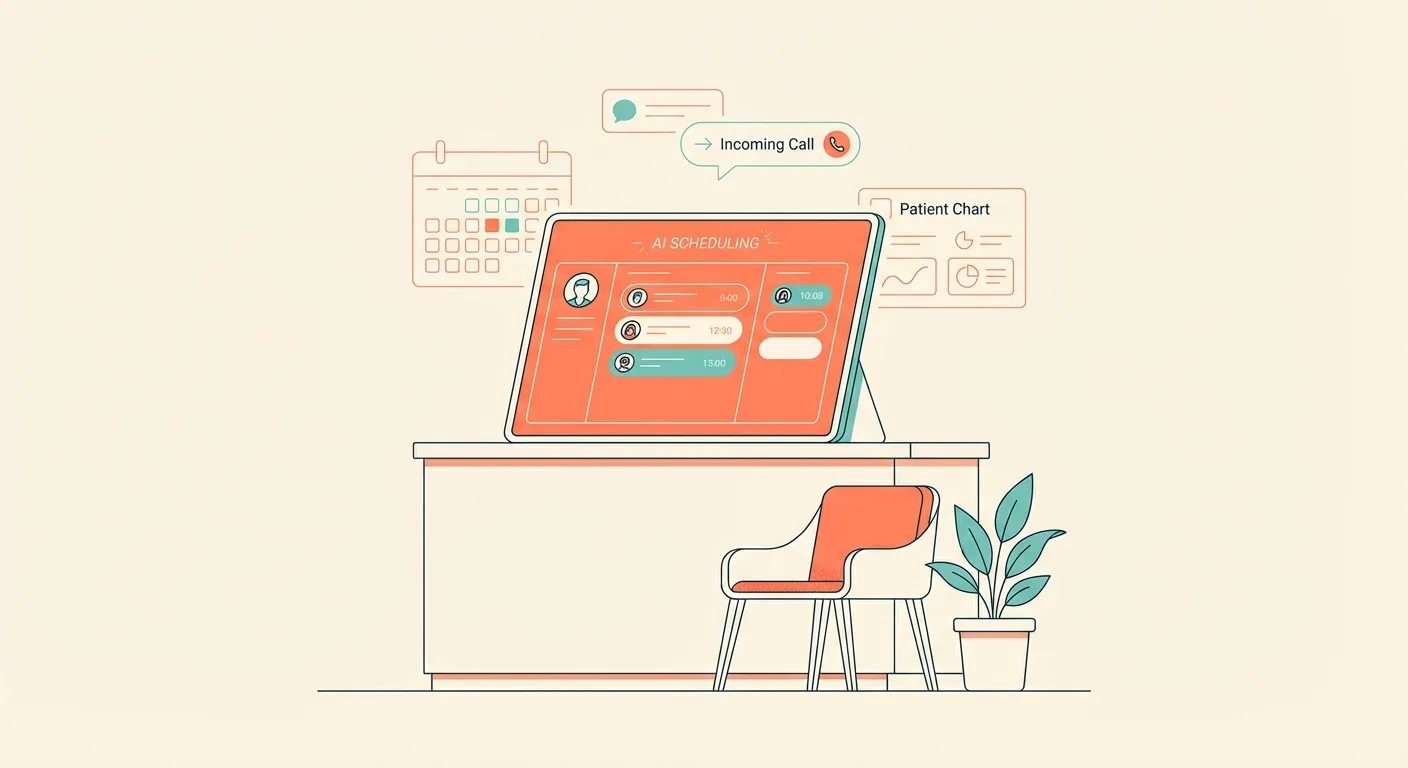
Top 5 Dental Tech Innovations Transforming Clinics in 2025
From AI scheduling to robotic-assisted procedures, these 5 dental tech innovations are reshaping how practices operate, retain patients, and grow revenue in 2025.
Why Smart Dental Clinics are Investing in Conversational AI
Discover how conversational AI is revolutionizing dental practices. Learn why leading clinics are adopting AI solutions for 24/7 patient engagement, reduced no-shows, and operational efficiency.