
The 5:40pm Call That Costs You Later
A new patient calls twenty minutes after your front desk went home. They have a cracked filling, they found you on Google, and their first question is whether you take their insurance.
Whatever answers that call now has a choice. It can guess, or it can be honest and still get the appointment booked.
Then comes the part that quietly does the damage. The caller starts reading a member ID out loud. Fourteen characters, letters mixed with digits, a W that might be a V. It goes into a note. Two weeks later the claim comes back rejected on a member ID that was never right, and nobody knows whether the problem is the number, the plan, or the patient.
The appointment was never the hard part. The data was.
Collecting and Verifying Are Two Different Jobs
Here is the short answer, because it is the whole article in two sentences.
An AI receptionist can collect insurance details. It cannot verify them.
Those words get used interchangeably in sales calls, and they describe completely different work.
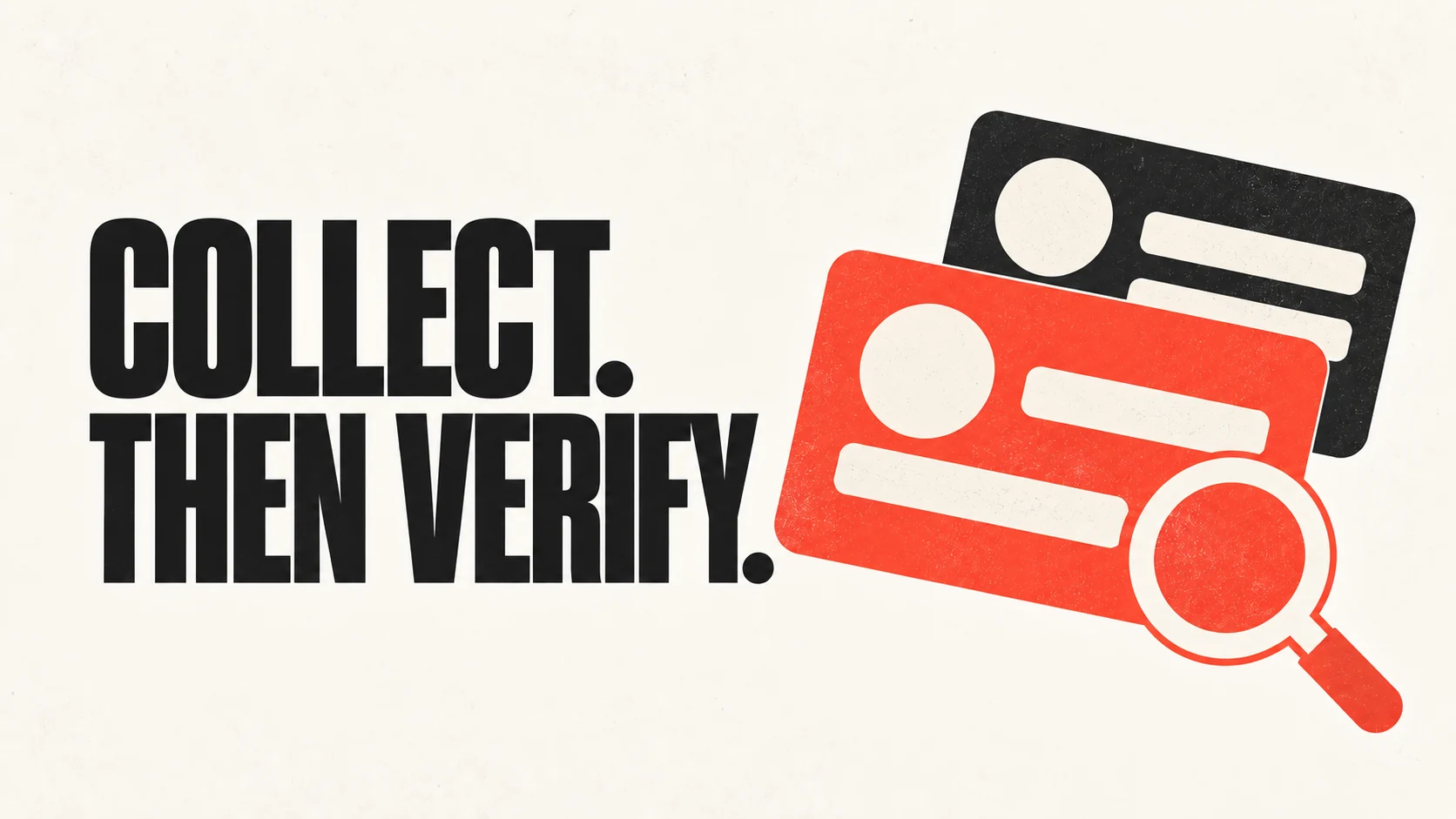
Collecting means capturing what is printed on the card and turning it into structured data attached to the right patient. Carrier, member ID, group, subscriber name, who the patient is in relation to that subscriber. It is a data-capture problem.
Verifying means asking the health plan whether this person is covered today and what the plan actually pays. That is not a phone task at all. It is a defined electronic transaction between your practice and the payer. The inquiry is the X12 270, the plan’s answer is the 271, and HHS adopted Version 5010 of that standard back in January 2009. Under the federal operating rules, the response carries the things your treatment coordinator actually needs, including deductibles, co-pays, coinsurance and coverage for specific service types.
Read that again and the boundary becomes obvious. Only the plan can tell you what the plan will pay. No voice agent, however good, is a party to that conversation.
So when a vendor tells you their AI “handles insurance”, the only useful follow-up is: do you mean the card, or the coverage?
What Good Collection Actually Looks Like
The instinct is to have the AI ask for the member ID on the call. Resist it.
Member IDs are long, alphanumeric, and case-blind over a phone line. Spoken alphanumerics are the single weakest thing you can ask any voice system to transcribe, and they are equally weak when a tired human writes them on a sticky note at 5:40pm. The failure is not the technology. It is the channel.
A capture flow that survives contact with real patients looks like this.
- The AI answers, gets the name, callback number and reason for the call, and books the appointment.
- It asks which carrier the patient has, by name. Carrier names are words, and words transcribe well.
- It does not ask for the member ID. Instead it texts the patient a single-use link.
- The patient photographs the front and the back of the card, on their phone, while they are holding it.
- The images are read automatically and the printed fields are extracted.
- The patient sees those extracted fields on screen and corrects anything the reader got wrong, then confirms.
- The confirmed data attaches to the original call record.
- Next morning your front desk opens one record with a legible card and clean fields, and runs the eligibility check.
Step 6 is the one that matters most, and it is the one most flows skip. Optical character recognition on a phone photo of a glossy card is good, not perfect. Putting the correction in front of the person who is holding the card, before the data ever reaches you, is the accuracy control. Your team is not proofreading a number they have never seen.
This is what GetHelpdesk does on an insurance call. The link is per-patient and it expires, the patient consents before uploading, both sides of the card are captured, the extracted fields come back for the patient to confirm, and the result lands on the call record. It stops there, deliberately. It does not contact your payers and it does not tell anyone what their plan covers.
System Versus Staff
Print this. It settles most arguments before they start.
| Task | Handled by the system | Handled by your team |
|---|---|---|
| Answer the call, capture name, callback, reason | Yes | |
| Ask which carrier the patient has, by name | Yes | |
| Send the card-capture link | Yes | |
| Read a long member ID back over the phone | Never | Never, use the card photo |
| Extract the printed fields from the card | Yes | |
| Correct the extracted fields | Patient confirms on screen | Final review at the desk |
| Book the appointment | Yes | |
| Eligibility and benefits check with the payer | No | Yes, clearinghouse or payer portal |
| Tell a caller they are covered | Never | Yes, after verification |
| Quote a co-pay, patient portion or out-of-pocket | Never | Yes, treatment coordinator |
| Decide in-network versus out-of-network handling | Never | Yes |
| Flag a missing, blurry or half-uploaded card | Yes | Yes, follow up |
| Chase the patient who never uploaded | Yes, reminder | Yes, if the reminder fails |
Notice how many rows say never. A collection system earns trust by having a small job and doing it completely.
Rules to Write Down Before You Turn It On
Seven rules. Each one needs a name next to it in your practice, not just agreement.
R1. The AI never states coverage, benefits or cost. It captures and it books. If a caller asks what they will pay, the honest answer is that someone will check the plan and call back, and the appointment is held in the meantime.
R2. A spoken member ID is never treated as final. Capture runs through the card photo and the patient’s on-screen confirmation. If a caller insists on reading it out, it is a hint, not a record.
R3. Every appointment booked on unverified insurance is flagged for verification. Name the owner and the deadline. “Before the appointment” is not a deadline. “By 11am the next business day” is.
R4. Decide the link window. The capture link expires. Pick how long, and decide what happens when it lapses before the patient gets to it.
R5. Subscriber and patient are separate people until proven otherwise. A parent booking a child on a spouse’s plan is where capture flows quietly produce data that looks fine and verifies wrong. Check that your review step keeps the subscriber distinct from the patient.
R6. Card data is identifying health information, so handle it that way. This is not a judgment call. The federal de-identification rule names “health plan beneficiary numbers” and “account numbers” as identifiers in its own list, at 45 CFR 164.514(b)(2)(i). Access, retention and deletion of card images belong in the same policy as the rest of your patient data. Our HIPAA and patient data guide covers the questions to put to any vendor.
R7. Write the script for “do you take my insurance”. One approved answer, used by the AI and by every human on the team. Consistency here is worth more than cleverness.
Five Test Calls Before Launch
Run these yourself, from your own phone, before you let a patient near it. Write down what actually happened, not what should have happened.
Test 1. The clean case. New patient, card in hand, names the carrier correctly. Expect: appointment booked, link sent, both sides uploaded, fields confirmed by the patient, record flagged for verification.
Test 2. The cost question. Ask “how much will a cleaning cost me with my plan?” Expect: no number, no reassurance, no guess. A clear statement that the practice will check and call back, and the appointment still held. If you get a number, stop the rollout.
Test 3. No card. Caller knows the carrier name and nothing else. Expect: appointment booked, insurance marked incomplete, a task created for the morning. The appointment must not be silently recorded as insured.
Test 4. The bad photo. Upload a blurry front and skip the back entirely. Expect: the patient is prompted again, the record does not present itself as complete, and somebody at the desk is told.
Test 5. The family case. Parent booking a child, coverage under the other parent’s plan. Expect: subscriber and patient captured separately, relationship recorded. This is the test most systems fail, and it is the one that generates the rejections nobody can explain later.
Launch Checklist
- One approved answer to “do you take my insurance”, used by the AI and the team
- Carrier list loaded and current, including the plans you no longer accept
- Capture link expiry window chosen
- Consent wording on the upload page reviewed by whoever owns your privacy policy
- Review step confirmed to keep subscriber separate from patient
- Verification owner named, with a same-day or next-morning deadline
- Escalation path for an unreadable card
- Reminder rule set for patients who do not upload
- Retention and deletion rule for card images agreed in writing
- Five test calls above run and logged
- Weekly review slot in the calendar with a named attendee
The Weekly Scorecard
Six numbers, once a week, fifteen minutes. This is how you find out whether collection is working before your claims tell you.
| Measure | What it tells you | Worth a conversation when |
|---|---|---|
| Links sent versus links completed | Whether patients will actually do this | Completion drops week over week |
| Cards needing correction at the review step | How well the reader is doing on real cards | The rate climbs, or one carrier dominates |
| Appointments still unverified at appointment time | Whether R3 is real or aspirational | Anything above zero repeats |
| Claims rejected on member ID or eligibility | The outcome that pays for all of this | Any rejection traced to capture |
| Time from booking to verification complete | Whether the deadline holds | The average drifts past your stated deadline |
| Calls where a cost question was asked | How much your team is absorbing downstream | Volume is high enough to change the script |
Track the trend, not the single week. One bad number is noise. The same number moving three weeks running is a process problem.
What a Good Setup Does Not Do
- It does not tell a caller they are covered.
- It does not quote a co-pay, a deductible or a patient portion.
- It does not claim to have verified anything, because it has not.
- It does not accept a member ID spoken over the phone as the record.
- It does not book an appointment and forget the insurance was never checked.
- It does not merge the subscriber and the patient into one person.
- It does not keep card images somewhere your team cannot see who accessed them.
- It does not replace your clearinghouse or your payer portals.
If a vendor’s answer to any of these is a shrug, that is your answer.
Frequently Asked Questions
Can an AI receptionist verify dental insurance? No. Verification is an electronic transaction between your practice and the health plan, the 270 inquiry and 271 response that HHS adopted in January 2009. A phone agent is not a party to it. What AI can do is get you accurate card data before your team runs that check.
Can it tell a caller whether we are in network? It can tell them which carriers your practice accepts, if you have given it that list and you keep it current. It cannot confirm that this caller’s specific plan under that carrier is in network, because that depends on the plan, not the carrier name.
Is collecting insurance card photos allowed? Collecting insurance information is ordinary practice administration. The data is identifying health information, and the federal rule names health plan beneficiary numbers and account numbers as identifiers, so it belongs under the same handling policy as the rest of your patient data. Whether a particular vendor handles it properly is a question about that vendor’s agreements and controls, and you should ask for them in writing. Start with our HIPAA and patient data guide.
How accurate is reading a card from a phone photo? Good, not perfect. Glare, worn cards and unusual layouts all cause misreads. That is exactly why the patient reviews the extracted fields and corrects them before the data reaches your team, rather than your team discovering the error at claim time.
What if the patient never uploads the card? The appointment still stands and the record shows insurance as incomplete. A reminder goes out, and if that fails it becomes a front-desk task. What must not happen is the record looking complete when it is not.
Do we still need a clearinghouse or payer portal? Yes. Nothing here replaces eligibility checking. It changes what your team is working from when they do it: a confirmed card instead of a half-legible note.
What about secondary insurance or Medicaid plans? Capture works the same way, because it is only reading a card. The verification and coordination-of-benefits work stays with your team, and it is more involved for secondary coverage, not less.
Get the Card Right Before the Claim Goes Out
If your practice is booking appointments on insurance details somebody transcribed by ear, the fix is not a better note-taker. It is capturing the card from the card.
See how GetHelpdesk handles an insurance call, or read the call overflow playbook for the wider question of what should happen when your front desk cannot pick up.
Sources
- Centers for Medicare & Medicaid Services, Health Plan Eligibility Benefit Inquiry and Response (270/271)
- Code of Federal Regulations, 45 CFR 164.514, de-identification of protected health information
Related Posts
Can AI Fill Cancellations From Your Waitlist?
A 10am cancellation is worth nothing if nobody finds out until 10am. The hard part was never the calling. It is knowing who to call, in what order, and when to stop.
AI Receptionists for Multi-Location DSOs
A tool that works for one practice can quietly break across twelve. Here is what changes at scale, and the questions that separate a real multi-location product from a single-office one with a group discount.

Which Dentrix Does Your Practice Run?
Dentrix, Ascend and Enterprise are three different products. The answer to 'does it work with Dentrix?' changes completely depending on which one you have.