

Reclaiming Lost Time in Your Dental Practice
In the demanding world of dental practice management, time is truly money. Every hour spent on repetitive, administrative tasks is an hour not spent on patient care, strategic growth, or team development. Many dental practices are constantly searching for ways to optimize their operations and free up valuable time.
What if we told you that your practice could potentially save 40+ hours monthly by leveraging the power of AI?
This isn’t an exaggeration. Research by Dental Economics shows that front desk staff spend 60-70% of their time on routine, repetitive tasks. The cumulative effect of automating these tasks can lead to significant time savings that directly impact your bottom line and overall efficiency.
Where Do Those Hours Actually Go?
Let’s break down where those precious hours often get lost in a typical dental practice:
Answering Routine Phone Calls (15-25 hours/month)
Patients call with questions about:
- Office hours and location
- Directions and parking
- Services offered
- Insurance acceptance
- Simple appointment confirmations
Each call, even if quick (2-3 minutes), adds up. A practice receiving 50 calls per day spends 8-12 hours weekly just on routine inquiries.
Appointment Management (10-15 hours/month)
Time spent on:
- Scheduling new patients
- Rescheduling existing appointments
- Confirming appointments
- Handling cancellations
- Playing phone tag with patients who don’t answer
This consumes a substantial portion of the front desk’s day, often involving multiple attempts to reach patients.
Providing Basic Information (5-10 hours/month)
Explaining over the phone:
- Pre-operative instructions
- Post-operative care guidelines
- Common dental procedures
- What to expect at first visits
These conversations, while important, follow similar scripts that AI can deliver consistently.
Responding to After-Hours Inquiries (5-8 hours/month)
Following up on:
- Voicemails left after business hours
- Messages from weekend callers
- Urgent vs. non-urgent triaging the next morning
This creates a backlog every Monday that can take hours to clear.
Repetitive Data Entry (3-5 hours/month)
Manually entering:
- Patient information from phone calls
- Appointment notes into the PMS
- Insurance details captured verbally
While some entry is necessary, much can be automated with proper PMS integration.
Individually, these tasks might seem minor. Collectively, they create a significant drain on staff time, pulling them away from more complex patient interactions and proactive practice management.
The GetHelpdesk.ai Advantage: Reclaiming Your Time
GetHelpdesk.ai acts as a powerful force multiplier for your dental practice, specifically designed to reclaim those lost hours. Here’s how our AI-powered answering service achieves substantial time savings:
Automated Answering of FAQs: 20+ Hours Saved
Our AI can instantly answer 80% or more of your incoming patient calls that are routine inquiries. This eliminates the need for your staff to pick up the phone for questions like:
- “What are your hours?”
- “Do you accept Delta Dental?”
- “Where are you located?”
- “Do you offer teeth whitening?”
- “How do I prepare for my root canal?”
The AI provides accurate, consistent answers 24/7, and only escalates to staff when truly necessary.
Streamlined Appointment Management: 10+ Hours Saved
The AI allows patients to easily:
- Book new appointments
- Confirm existing appointments
- Reschedule when needed
- Cancel with proper notice
This drastically reduces the number of calls your staff needs to handle for these administrative tasks. Direct integration with your PMS means no double-entry—appointments flow directly into your system.
24/7 Information Access: 5+ Hours Saved
By providing instant, round-the-clock access to information, your AI reduces:
- Urgent calls after hours or on weekends
- Voicemails that pile up overnight
- Monday morning call backlogs
Patients get answers immediately, and your staff arrives to a manageable inbox.
Reduced Voicemail and Callback Time: 5+ Hours Saved
When the AI handles initial inquiries, fewer calls go to voicemail, meaning less time spent:
- Listening to lengthy voicemails
- Transcribing patient requests
- Calling patients back (often multiple attempts)
Breaking Down the Time Savings
| Task Category | Hours/Month Without AI | Hours/Month With AI | Time Saved |
|---|---|---|---|
| Routine phone calls | 20-25 | 3-5 | 17-20 |
| Appointment management | 12-15 | 3-4 | 9-11 |
| Basic information | 8-10 | 1-2 | 7-8 |
| After-hours follow-up | 6-8 | 1-2 | 5-6 |
| Data entry | 4-5 | 1-2 | 3 |
| Total | 50-63 | 9-15 | 41-48+ |
These are conservative estimates based on practices using GetHelpdesk.ai. For busy practices with high call volumes, the time savings could be even more substantial.
What Your Team Does with 40 Extra Hours
By offloading routine tasks, your front desk staff can focus on higher-value activities:
Enhanced Patient Experience
- Providing personalized attention to patients in the office
- Having meaningful conversations without phone interruptions
- Creating a welcoming, less chaotic waiting room environment
Complex Task Handling
- Resolving billing questions that require investigation
- Managing insurance pre-authorizations
- Handling sensitive patient situations with care
Practice Growth
- Following up with patients who haven’t booked follow-ups
- Conducting patient satisfaction outreach
- Supporting marketing initiatives
- Improving online reviews through personal requests
Team Wellbeing
- Reduced stress and burnout
- Time for training and professional development
- Lunch breaks that don’t get interrupted
Real Practice Results
Practices using GetHelpdesk.ai report:
“We were drowning in phone calls. Now our front desk actually has time to smile at patients when they walk in.” — Office Manager, Houston TX
“I calculated we save over 45 hours monthly. That’s basically a part-time employee’s worth of work.” — Practice Owner, Atlanta GA
“Monday mornings used to be chaos. Now we start the week with a clean slate.” — Front Desk Lead, Denver CO
Key Takeaways
- 40+ hours monthly can be saved by automating routine dental practice communications
- Routine phone calls are the biggest time drain—and the easiest to automate
- Staff don’t lose jobs—they do more meaningful, fulfilling work
- Patient experience improves when staff aren’t constantly interrupted by phones
- ROI is measurable in both time saved and cost reduction
Frequently Asked Questions
How do you calculate the 40+ hours saved?
We track metrics across hundreds of practices: call volume, call duration, resolution rates, and staff time allocation before and after implementation. The 40+ hours is a conservative average for a typical practice receiving 40-60 calls per day.
What if we have lower call volume?
Even practices with 20-30 calls daily see significant time savings—typically 20-30 hours monthly. The percentage of time saved remains similar; the absolute numbers scale with your volume.
Will our call quality suffer if AI answers?
Actually, quality often improves. AI provides consistent, accurate information every time—no variations based on how busy the office is or which staff member answers. Patients appreciate getting instant answers instead of waiting on hold.
What about the time spent managing the AI system?
GetHelpdesk.ai is designed to require minimal oversight. Most practices spend 15-30 minutes weekly reviewing interactions and making occasional updates. The dashboard makes monitoring effortless.
How quickly do we see time savings?
Many practices notice reduced phone pressure within the first week. Full time savings are typically realized within 4-6 weeks as AI handles an increasing percentage of calls.
Can we measure our specific time savings?
Yes! Our analytics dashboard tracks exactly how many calls AI handles, how many are escalated to staff, and estimates time saved based on your volume. We help you calculate ROI specific to your practice.
Stop Letting Valuable Time Slip Away
Imagine what your team could achieve with an extra 40+ hours every month. That’s a full work week recovered—every single month.
Don’t let valuable time slip away on tasks that AI can handle better, faster, and around the clock.
👉 Schedule a free demo with GetHelpdesk.ai today and let’s calculate your potential time savings.
Your team’s time is too valuable to waste on hold. Let AI handle the routine—so you can focus on what matters.
Related Posts
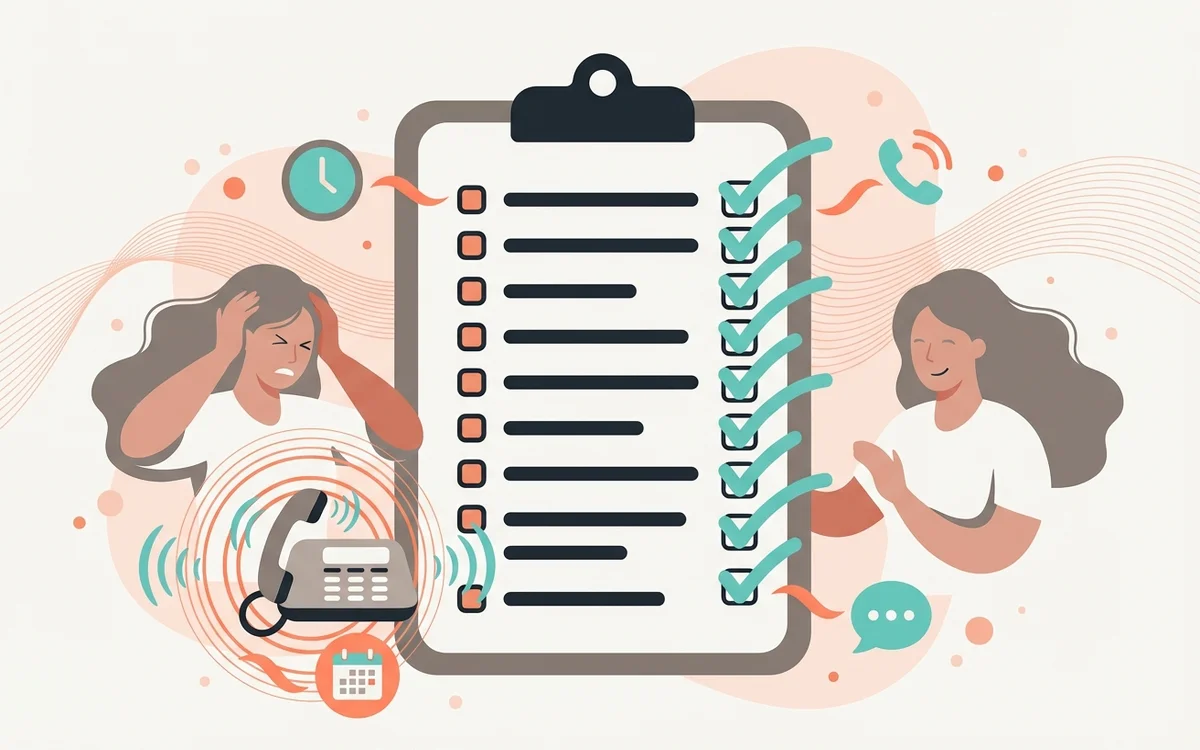
10 Signs Your Dental Practice Needs an AI Answering Service
Not sure if AI answering is right for your practice? These 10 signals — from missed calls to Monday morning voicemail backlogs — tell you the answer.

AI 101 for Dentists: A Plain-Language Guide to What It Is and What It Does
Artificial intelligence sounds complicated until you see what it actually does at a dental practice. This guide explains the concepts that matter — and skips the ones that don't.
AI Answering Service for Dental Practices: The Complete Guide
Everything dental practice owners need to know about AI answering services — how they work, what they cost, what to look for, and how they compare to traditional solutions.