
Every dental practice owner has seen the moment. It’s 10:30 AM on a Tuesday. Three patients are waiting to check in. The phone is ringing for the second time in two minutes. The fax machine just spit out an insurance authorization. A patient at the desk needs help understanding their treatment plan.
Your front desk team has two hands and one phone line. Something gets dropped.
That dropped thing — the unanswered call, the rushed check-in, the insurance question that gets deferred — isn’t just an operational hiccup. It’s a patient experience failure. And patient experience failures compound into lost patients, negative reviews, and staff burnout.
The problem isn’t your team. The problem is the volume.
The Volume Problem Is Structural
The typical dental practice front desk was designed for a different era. One or two receptionists managing scheduling, check-ins, insurance verification, phone calls, recalls, and patient communication worked when practices saw 15-20 patients per day and the phone was the only communication channel.
Modern practices see 25-40 patients per day across multiple providers. They manage calls, texts, web inquiries, and insurance portals. Patient expectations for responsiveness have accelerated — a 30-second hold time that felt acceptable five years ago now frustrates patients who are used to instant digital responses.
The math doesn’t work. The volume has grown faster than front desk capacity. Practices respond by either:
- Adding staff — expensive ($35,000-$50,000 per year per hire), hard to recruit in today’s dental staffing market, and still limited by human attention capacity
- Absorbing the overflow — which means missed calls, longer hold times, rushed interactions, and burned-out staff
- Deploying AI — which handles specific volume categories automatically
Most practices are currently in option 2 without realizing it. The symptoms are well-known: high front desk turnover, consistent missed calls (especially during peak hours), and a team that’s exhausted by 3 PM.
Where the Overwhelm Concentrates
Not all front desk work creates equal stress. The overwhelm concentrates in a few specific moments.
Phone + In-Office Collision
The worst moment for any front desk team: a patient standing at the desk needs attention while the phone rings. Both need to be handled now. One of them gets a suboptimal experience.
This collision happens multiple times per day in most practices. It’s the primary cause of both patient dissatisfaction (the person on the phone) and staff frustration (the team member who has to choose).
Peak Morning Calls
Call volume peaks between 8-10 AM when patients are calling to schedule, confirm, or ask pre-visit questions. This overlaps exactly with the morning check-in rush. Front desks are maximally busy on phones and in-person simultaneously.
After-Hours Accumulation
Calls that come in after hours accumulate as voicemails (if patients leave them) or as missed opportunities (if they don’t). Monday mornings, the team faces a backlog of Friday evening, Saturday, and Sunday calls to return — on top of Monday’s regular volume.
Same-Day Cancellations
Cancellations create a cascade: the team needs to fill the slot, which means calling patients from the waitlist, which adds outbound call volume on top of the inbound volume that’s already overwhelming.
How AI Takes Specific Pressure Off
AI for dental front desks isn’t a general-purpose assistant that makes everything vaguely better. It specifically addresses the volume categories that cause the most stress.
Phone Coverage During In-Office Moments
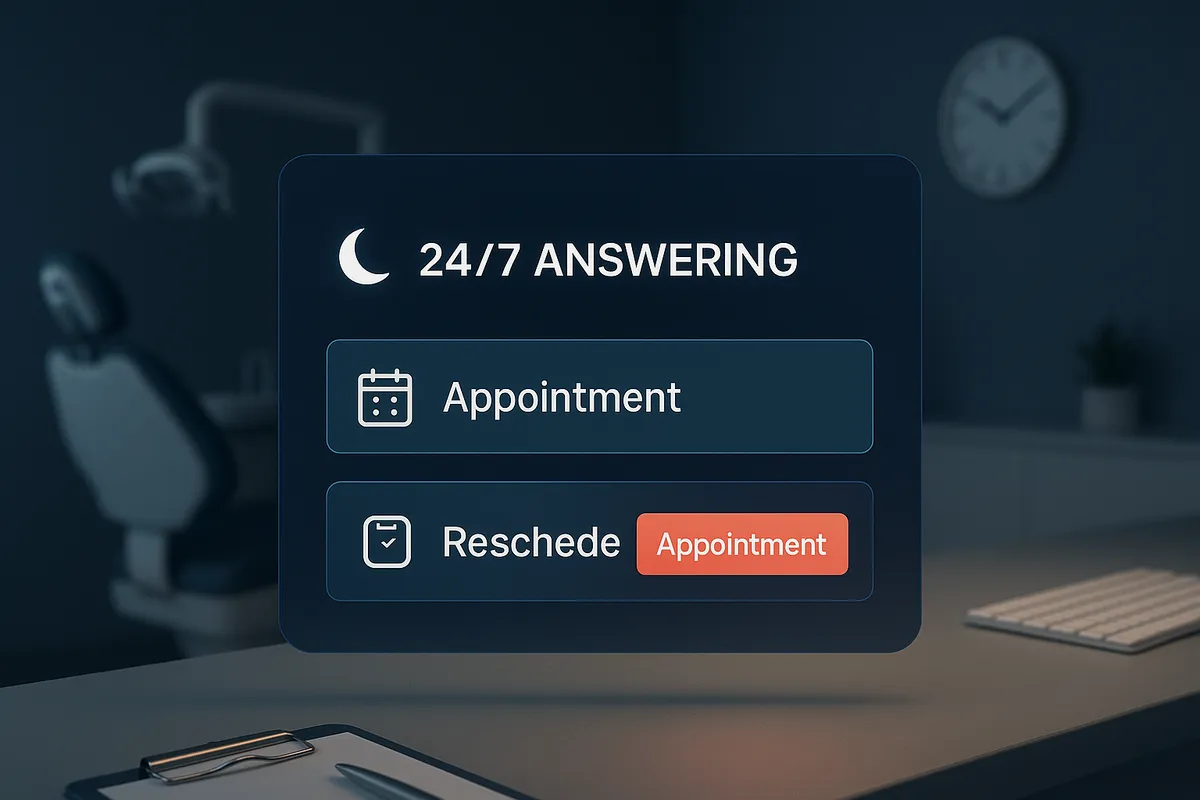
When a front desk team member is with a patient at the desk, GetHelpdesk.AI handles incoming calls. The team member gives full attention to the in-office patient. The caller gets an immediate answer and a booked appointment. Neither experience is compromised.
This single capability — overflow phone handling during busy moments — is the feature most practices cite as the highest-impact change when they deploy AI answering.
After-Hours and Closed-Day Booking
Instead of accumulating voicemails, after-hours calls are answered by AI that books appointments in real time. Monday morning, the schedule is already partially filled by weekend bookings. The team doesn’t start the week in a deficit.
For practices closed one or more weekdays, that closed day becomes a productive booking day despite zero staff presence.
Simultaneous Call Handling
Human front desks handle one call at a time. When a second call comes in, it goes to hold or voicemail. AI handles unlimited simultaneous calls — no patient ever waits because another patient called first.
Consistent Information Delivery
AI answers the same question the same way every time. “Do you accept Delta Dental?” gets an accurate, specific response whether it’s asked at 9 AM on Monday or 11 PM on Saturday. This eliminates one of the invisible stressors on front desk teams: the cognitive load of remembering and accurately communicating dozens of insurance details, procedure preparations, and practice policies under time pressure.
The Staff Burnout Connection
Front desk burnout in dental practices is a real operational risk, not just an HR concern. Burned-out staff make more errors, project less warmth, and leave — taking their training investment with them.
The connection between volume pressure and burnout is direct. When a front desk team member handles 80+ calls per day on top of in-office patient management, the quality of every interaction degrades by afternoon. Short tempers, rushed responses, and mistakes in scheduling follow.
AI doesn’t eliminate the front desk role — it reduces the volume that creates the burnout conditions. A front desk team handling 30 in-office interactions per day with AI managing phone overflow is a team with capacity for warmth, accuracy, and professional satisfaction.
Practices running GetHelpdesk.AI consistently report improved front desk satisfaction alongside improved patient satisfaction — because both improve when the volume pressure decreases.
Key Takeaways
- Front desk overwhelm is a structural problem — volume has outgrown the traditional staffing model, and adding headcount is expensive and hard
- The worst moments concentrate where phone calls collide with in-office patients — both experiences suffer
- AI specifically addresses phone overflow, after-hours calls, simultaneous call handling, and consistent information delivery
- After-hours AI booking means Monday mornings start with a partially filled schedule instead of a voicemail backlog
- Reducing volume pressure directly reduces staff burnout and turnover — improving both patient and team satisfaction
Frequently Asked Questions
How do I know if my front desk is overwhelmed enough to need AI? Track your missed call rate for two weeks. If more than 15-20% of inbound calls go unanswered or to voicemail during business hours, your front desk is at capacity. Also check: does your team regularly skip lunch to catch up on calls? Does call volume cause visible stress during peak hours?
Will my front desk team feel threatened by AI? When framed correctly — as phone overflow and after-hours support, not replacement — teams typically welcome it. The staff member who no longer has to choose between the patient at the desk and the ringing phone is genuinely relieved.
Can AI handle the complex calls, not just simple bookings? AI handles the structured, repeatable call types: appointment booking, insurance questions, hours and directions, appointment confirmations. Complex situations — billing disputes, treatment concerns, emotionally sensitive conversations — route to your team. This division of labor is what makes it effective.
What’s the cost comparison: hiring vs. AI? A full-time front desk hire costs $35,000-$50,000/year plus benefits, training, and management overhead. AI answering operates at a flat monthly subscription — typically a fraction of a full-time hire — while handling after-hours, overflow, and simultaneous calls that a single human can’t.
How quickly can we get AI answering set up? GetHelpdesk.AI onboards practices within a week. The configuration covers your scheduling rules, appointment types, practice information, and communication preferences.
Your team deserves backup — not more pressure. Book a demo to see how GetHelpdesk.AI handles the overflow so your front desk can breathe.
Related Posts
10 Signs Your Dental Practice Needs an AI Answering Service
Not sure if AI answering is right for your practice? These 10 signals — from missed calls to Monday morning voicemail backlogs — tell you the answer.

AI 101 for Dentists: A Plain-Language Guide to What It Is and What It Does
Artificial intelligence sounds complicated until you see what it actually does at a dental practice. This guide explains the concepts that matter — and skips the ones that don't.
AI Answering Service for Dental Practices: The Complete Guide
Everything dental practice owners need to know about AI answering services — how they work, what they cost, what to look for, and how they compare to traditional solutions.