
The Short Version
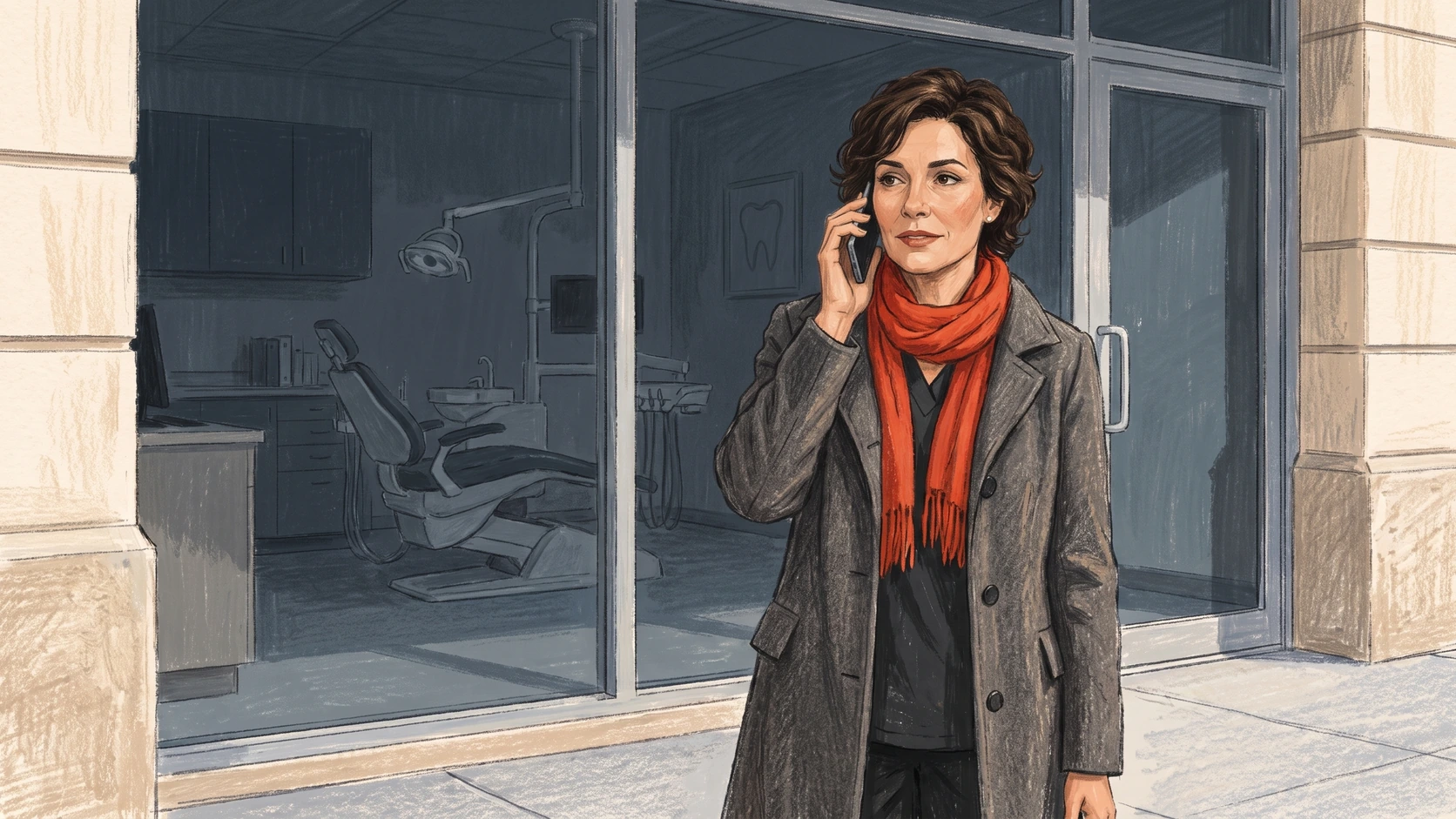
Every practice eventually has a day it cannot open. A pipe goes in the ceiling overnight. The power is out on the whole street. A storm closes the roads. The one dentist in a single-doctor practice wakes up genuinely unable to work.
The closure itself is usually straightforward. What is not straightforward is that forty or fifty people are going to arrive, or call, or both, and the person who would normally deal with that is also stuck at home.
Practices plan for the building. Very few plan for the phone, and the phone is where the whole day actually happens.
The Closure Is Not the Emergency. The Phone Is.
The American Dental Association’s guidance on emergency planning and disaster recovery for dental offices covers the building side thoroughly, and it is worth reading on its own terms. It also notes that the Occupational Safety and Health Administration requires employers with eleven or more employees to keep a written Emergency Action Plan, and sets out what that plan has to contain: alarms, escape routes, accounting for everybody once the building is clear, who has rescue and medical duties, how to report an emergency, and who to contact for more information. It should be reviewed at least annually.
All of that is about getting people out of a building safely. Almost none of it is about the two hundred people who were going to interact with your practice that day and now cannot.
The Florida Dental Association’s hurricane guidance is one of the few that names the gap directly. Under what to do when disaster strikes, it lists creating temporary phone and answering arrangements, and establishing patient telephone triage, alongside a full-circle call tree setting out who contacts whom. That is the part most practices have never written down.
What Actually Happens in the First Hour
There is a well-documented account of this in Dental Economics from March 2025, written by Dr Gregory Clepper, a practice owner in Augusta, Georgia, about Hurricane Helene in September 2024. His practice closed for almost two weeks. The detail worth sitting with is not the roof damage. It is this: for the first few days they had no way to reach their scheduled patients at all, because without power or internet they could not get to their own schedule.
That is the failure mode, and it does not require a hurricane. It requires any morning where the office is inaccessible and the list of who is coming in today lives somewhere the team cannot reach from a kitchen table.
Three things go wrong, in this order.
Nobody can see the day. The schedule is the single most important document in a closure and it is the one nobody has a copy of. Emergency checklists written for dental practices routinely put “print a hard copy of tomorrow’s schedule” near the top for exactly this reason, because it is the only version that survives everything.
The phone keeps ringing and nobody is on it. Patients who have not heard anything call the practice. So do the ones who did hear and want to rebook. So do labs and referring offices with no idea anything has happened. The volume on a closure day is higher than a normal day, not lower.
The answer, if there is one, is a voicemail message recorded for a different purpose. The standard out-of-hours greeting says you are closed and will return calls during business hours. On a day when there are no business hours, that message is actively misleading.
The Message Problem Nobody Solves in Advance
The most useful single line in Dr Clepper’s account is his recommendation to have a way to change the outgoing message, and to know in advance how to do it. It sounds trivial. It is the thing that fails.
The person who knows how to change the greeting is frequently the office manager, and on a closure day the office manager is dealing with the flood. The credentials are written down at the office, which is the building nobody can get into. By the time the message is updated it is mid-afternoon and most of the day’s patients have already had their experience of your practice, which was a ringing phone.
Worth deciding before you need it: who changes the message, how they do it from a phone rather than from the office, and what it says. A closure message that only says “we are closed today” is better than nothing but leaves every caller with the same next question. A closure message that says what has happened, when you expect to be back, what to do if this is urgent, and that you will contact them to rebook, prevents most of the follow-up calls.
The Caller Who Still Needs You
A closure does not pause anybody’s toothache.
Somewhere in the day’s calls is at least one person in real pain, and the ADA’s ethics code standard for people who are not patients of record is to make reasonable arrangements for emergency care. Your own patients reasonably expect more than that. On a normal day the practice absorbs this without thinking about it. On a closure day, if the plan is a voicemail box, that patient has nowhere to go and no information.
This is the part of closure planning that should be settled before the day arrives, because it cannot be improvised while somebody stands in a wet corridor. Who is the clinical point of contact when the building is shut. What does the phone tell a caller in pain. Is there a nearby practice you have an arrangement with, and do they know about it. After-hours dental emergencies works through what a good answer sounds like when nobody is in the building, and a closure day is that problem in daylight.
What Your Closure Plan Actually Needs
Short list. It fits on one page and it belongs somewhere that is not the office.
| Decision | Settled in advance | Improvised on the day |
|---|---|---|
| Who declares the closure | One named person, with a deputy | Three people texting each other |
| Where today’s schedule lives | A copy outside the building | Unreachable |
| Who changes the phone message | Named, with access from their own phone | Whoever has the password |
| What the message says | Written already, needs one date changed | Composed while standing in a corridor |
| Who calls the day’s patients | Divided by list, not by who is free | Nobody, until the afternoon |
| What a caller in pain is told | A clear route to care | Ringing |
| Who tells labs and referring offices | One person, one list | Discovered a week later |
The point of writing it down is not the document. It is that every one of these decisions is easy today and very hard on the morning itself.
Where an AI Answer Changes the Shape
A closure day is the clearest case for the phone not depending on the building, because the building is the thing that failed.
GetHelpdesk.AI answers whether or not anybody can get to the office, at any hour, and keeps answering for as many callers as arrive at once. On a closure morning that is the difference between a caller hearing an explanation and a caller hearing a ring tone. What it says can be changed to carry the closure and the expected return without anybody driving anywhere or recovering a password from a filing cabinet.
It also books. That matters more on this day than any other, because the entire problem is a day’s worth of appointments that need to move. A caller who rings to ask what is happening can be given a new time on the same call, rather than being added to a callback list that somebody has to work through later in the week. Every call comes back as a transcript and a summary, so the person who eventually picks up the pieces has a record of who rang, what they needed and who is still waiting on something, rather than reconstructing it from memory.
And because the plan is flat and month to month with no per-call charge, the day your call volume triples is not also a day that costs more.
What it does not do is decide whether to close, or treat the patient in pain. It makes sure both of those decisions reach the people who need to know.
Measure Your Own
Closure planning is one of the few things you can test without waiting for the event.
- Can somebody on your team, from home, tell you who is booked in tomorrow? Try it this evening.
- Can somebody on your team, from home, change the outgoing phone message? Time how long it takes.
- If the practice had to close at seven tomorrow morning, who makes that call, and who do they tell first?
- How many calls do you take on a normal day, and where would they go if nobody was in the building?
- When did you last update the contact list for your landlord, your insurer and the people you would need to ring?
The answers to the first two are usually no and nobody knows, and both are fixable this week.
Key Takeaways
- Every practice eventually has a day it cannot open, and the closure is rarely the difficult part.
- Call volume goes up on a closure day, not down, and the front desk is unavailable.
- The schedule is the most important document of the day and often the one nobody can reach.
- Published accounts of real closures point to the same failure: no way to contact scheduled patients for days.
- Deciding in advance who changes the phone message, and how, prevents most of the afternoon’s chaos.
- A standard out-of-hours greeting is misleading on a day with no business hours.
- Somebody calling that day is in real pain, and the plan has to answer them specifically.
Frequently Asked Questions
What should the phone say on a day we cannot open? Four things: that you are closed, why in one line, when you expect to be back, and what somebody should do if their problem is urgent. Adding that you will be in touch to rebook stops a large share of the repeat calls.
Who should decide to close? One named person, with one named deputy, agreed in advance. The most expensive part of a closure morning is usually the forty minutes spent deciding whether it is a closure.
Are we required to have an emergency plan? The ADA’s guidance notes that OSHA requires employers with eleven or more employees to maintain a written Emergency Action Plan, and sets out what it must contain. That plan is about getting people out of a building safely and does not cover the phone side, which is worth writing separately.
How do we reach the day’s patients if we cannot get into the office? Only if a copy of the schedule exists outside the building. This is why emergency checklists for dental practices consistently recommend keeping a printed copy of the coming day’s schedule, and it is the cheapest item on any closure plan.
What about labs and referring offices? They should be on the same one-page plan with a named person responsible. They are the group most often forgotten and the one most likely to cause a problem the following week.
Where to Start
Tonight, from home, try to find out who is booked in tomorrow morning. If you cannot, that is the first fix and it costs nothing.
Then write the closure message you would want to go out, leave the date blank, and store it where two people can find it. That is most of the plan. Why practices are replacing voicemail with something that answers covers the wider version of the same argument, and the morning after a night of AI calls covers what it looks like to pick up a pile of overnight calls in an organised way, which is exactly the job on the morning you reopen. The planned version of the same problem, the weekday you have chosen not to open, is in the weekday your practice is closed.
Related Posts
Covering Calls on a Closed Dental Weekday
On a closed weekday, answer, give the real next opening, book into a working day and route anything urgent. How to cover dental calls when you are shut.

What Answers Dental Calls After Hours and Books Them
At eleven at night, does a new patient end the call with a day and time, or a promise of a callback? The one test for any after-hours dental answering option.
The Patient Who Is Only Here Half the Year
Ask seasonal dental patients when they arrived and when they leave. Those two dates set how soon to book the first visit and what treatment can safely start.