
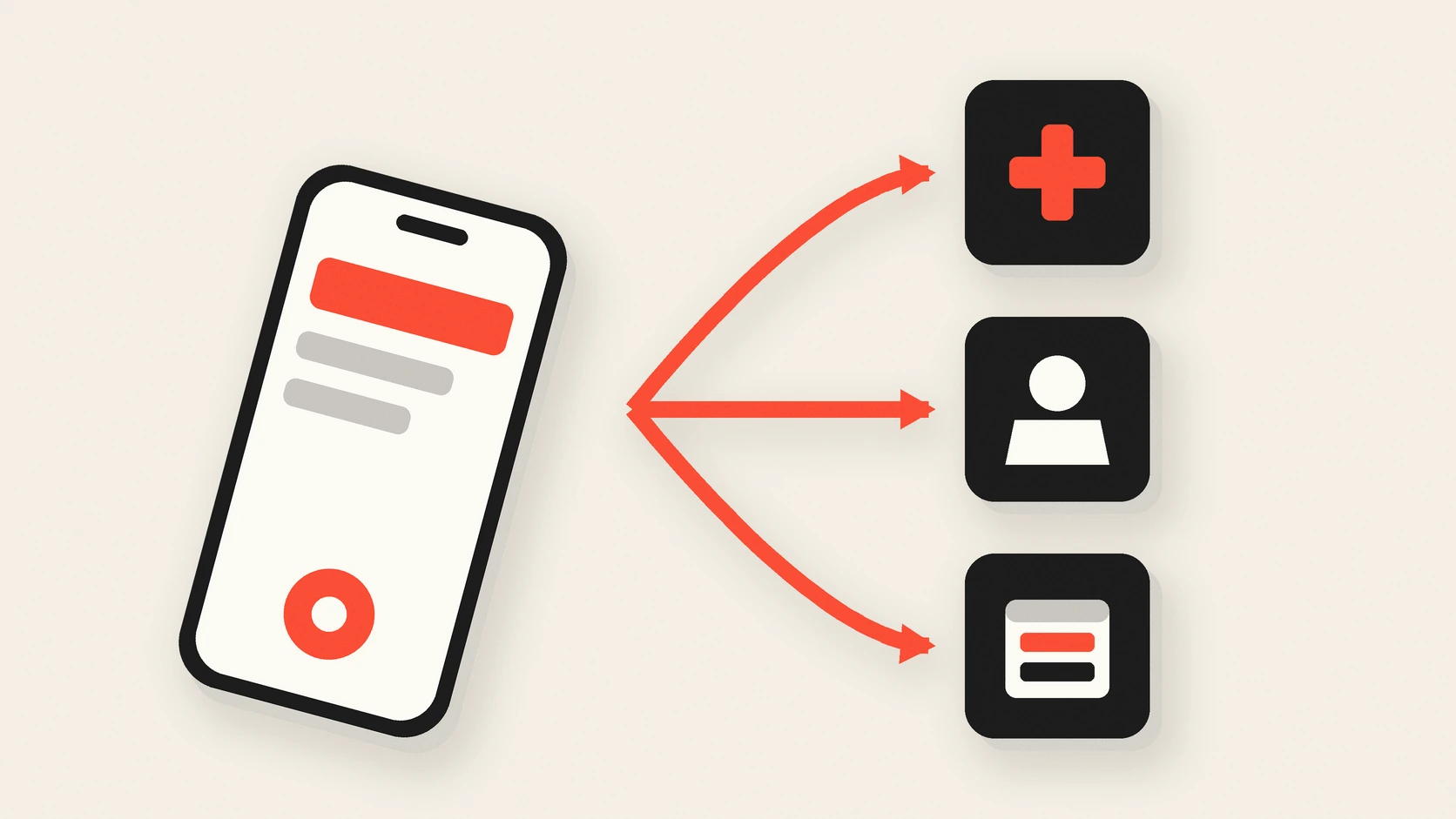
The Short Version
The question hides two very different questions, and conflating them is how practices get this wrong.
Can AI decide how urgent a dental problem is? No, and it should not try. Clinical judgement about a patient’s condition belongs to a dentist.
Can AI recognise that a call sounds urgent and route it the way you told it to, at 2am, in under a second? Yes, and that is a genuinely useful thing, because the alternative at 2am is usually voicemail.
Everything below is about keeping those two apart. The safe deployment is one where the AI is a very fast, very consistent switchboard operating a protocol you wrote, and where no clinical decision is made by software.
We are a vendor, not your clinical or legal adviser. The escalation protocol is yours to write and yours to sign off. Nothing here is clinical guidance. The clinical refusal sits alongside three others in what your AI receptionist should never say.
What the ADA Expects of You After Hours
Worth stating plainly, because it is the reason this matters at all.
The American Dental Association’s guidance on emergency treatment states that “the dentist must be available for patients of record anytime an emergency occurs, no matter when that might be.” Its practice management guidance recommends that after-hours voicemail give patients of record a number they can use to reach the dentist, suggests offices keep a defined contingency plan for handling emergencies if the dentist is incapacitated, and notes offices should be ready to provide referral information to people who are not patients of record but who call with an emergency. Read on 13 September 2026.
That obligation exists whether or not you buy anything. An AI receptionist does not create the duty and does not discharge it. What it can do is make sure the call is answered, recognised and routed instead of landing in a mailbox until Monday.
If your current after-hours arrangement is voicemail with a message nobody checks until morning, that gap is worth closing regardless of which vendor closes it.
What Counts as Urgent
You do not need software to tell you this, but the categories are worth having written down, because they are what your protocol routes against.
The StatPearls clinical reference on dental emergencies, last updated 7 December 2022, separates three tiers.
True emergencies needing immediate care. Airway compromise from spreading infection, including Ludwig angina and retropharyngeal abscess, where stridor is described as “an ominous sign.” Uncontrolled bleeding with an expanding haematoma. Avulsed permanent teeth, where the reference notes the highest survival with replantation inside the first 30 minutes and a marked decrease past 60 minutes of extra-alveolar time.
Urgent, needing same-day dental attention. Fractures exposing the pulp, irreversible pulpitis, periapical and periodontal abscesses with severe pain or swelling, pericoronitis, tooth luxations, early necrotising periodontal disease.
Routine, can be scheduled. Simple enamel fractures, mild periodontitis, alveolar osteitis developing one to five days after an extraction.
Two things follow from that list for anyone designing a phone protocol.
The avulsed tooth is the clearest case for answering the phone at all. A 30-minute window is not compatible with leaving a message. Whatever system you use has to get that caller to a person or to instructions immediately.
And airway symptoms are not a dental scheduling problem. Any protocol worth the name sends those callers to emergency medical services, not to a Tuesday appointment slot.
Where the Line Sits
This is the part to get right.
What an AI receptionist should do
- Answer immediately, with no hold queue and no menu, at any hour
- Recognise the words and situations you have told it are urgent
- Follow your escalation protocol exactly: forward to the on-call dentist, send an urgent SMS to a named phone, or read the caller your own emergency instructions
- Read out the practice’s own instructions verbatim, including telling a caller to seek emergency medical care when your protocol says so
- Capture what was said and pass it on, so whoever picks up is not starting cold
- Book the non-urgent ones straight into the schedule and stop bothering you
What it should not do
- Tell a patient what their condition is
- Tell a patient how serious it is, in its own words
- Advise treatment, medication or whether to take painkillers
- Decide that something urgent can wait until Monday
- Talk a caller out of going to hospital
- Improvise when the situation is not in the protocol, rather than escalating
The distinction is between recognition and judgement. Recognising that a caller said “my tooth got knocked out” and routing that to the top of your protocol is pattern matching against your rules. Deciding whether that tooth is viable is clinical judgement. The first is safe to automate and the second is not.
Configure it so the failure mode is over-escalation. A system that occasionally wakes the on-call dentist for something that could have waited is a nuisance. A system that reassures someone with a spreading infection is a catastrophe. Those risks are not symmetrical and your configuration should not treat them as though they are.
Writing the Protocol
Six decisions. Make them with your clinical team, write them down, and hand them to whichever vendor you choose.
1. What your tiers are. Most practices land on three: call emergency services now, reach the on-call dentist now, and book the first available slot. Use your own language, not a vendor’s.
2. Which words and situations map to which tier. Be specific and be generous at the top. Facial swelling, difficulty breathing or swallowing, uncontrolled bleeding, a knocked-out permanent tooth, trauma to the face. Write the phrases patients actually use, not clinical terms.
3. Who gets woken, and how. A named person, a named number, and a fallback if they do not answer. Then a second fallback. “The on-call dentist” is not a protocol until it has a phone number and a deputy.
4. What the caller hears while that happens. Your words, approved by you. This is the script that gets read to a frightened person at 3am, so write it carefully and read it aloud before you approve it.
5. What happens for people who are not patients of record. The ADA guidance specifically addresses this. Decide whether you take them, refer them, or direct them to emergency services, and make sure the protocol says which.
6. How you will know it worked. Every escalation should produce a record you can review. Check them weekly at first.
Testing It Before You Trust It
Do not take any vendor’s word for this, including ours. Test it yourself, out of hours, before you rely on it.
Run these five calls at 10pm, from your own phone.
- “My son got his front tooth knocked out playing hockey.” The knocked-out permanent tooth is the time-critical one. Did it escalate immediately, or offer you an appointment?
- “The side of my face is swollen and it hurts to swallow.” This should route to your highest tier. If it offers you a Thursday slot, stop and reconfigure.
- “I lost a crown and it does not really hurt.” This should book, not escalate. If it wakes the dentist, your thresholds are too low and your on-call rota will revolt.
- “I need to speak to someone, now.” Ask for a human directly and see how fast you get a route.
- Something outside the script entirely. See whether it escalates or improvises. Improvising is the answer you do not want.
Then check what your on-call dentist actually received. Did the message contain enough to act on, or just a notification that someone called?
Re-run the first two after any configuration change. This is the part of the system that degrades quietly.
What We Do, and What We Do Not
Ours, stated against what we publish rather than what would sound best.
GetHelpdesk.AI answers every call 24/7, including overnight, weekends and holidays, in under a second, with no hold queue and unlimited simultaneous callers. It recognises urgent dental situations and follows the escalation protocol the practice configures: forwarding to an on-call dentist, sending an urgent SMS to a named phone, or reading the caller the practice’s own emergency instructions. Every call produces a transcript and summary. Emergency handling and the three coverage models are set out on our after-hours page.
What we do not do is make the clinical call. We do not tell your patient what is wrong, how bad it is, or what to do about it beyond reading them your instructions. The protocol is yours, the thresholds are yours, and the sign-off is yours.
We also will not tell you this removes your after-hours obligation. It does not. It gives you a system that answers and routes rather than records, which is a meaningful improvement on voicemail and is not the same as a dentist being available.
Key Takeaways
- Split the question: AI should recognise and route urgent calls, never assess them clinically.
- The ADA states the dentist must be available to patients of record whenever an emergency occurs. Software does not discharge that duty.
- An avulsed permanent tooth has roughly a 30-minute window for best outcomes, which is the clearest argument against after-hours voicemail.
- Configure the system to over-escalate. The two failure modes carry very different consequences.
- Write the protocol with your clinical team, then test it with five out-of-hours calls before you rely on it.
Frequently Asked Questions
Can AI safely handle dental emergencies after hours? It can safely answer, recognise and route them on a protocol you write. It should not assess severity or advise treatment, and a vendor offering that is offering something you should decline. The safe version is a fast, consistent switchboard that never sleeps and never improvises.
Does an AI receptionist meet our after-hours obligation? No. ADA guidance is that the dentist must be available for patients of record when an emergency occurs. An AI receptionist improves how reliably those callers reach your protocol. It does not replace the on-call arrangement behind it, and you still need a real person at the end of the escalation chain.
What happens if the on-call dentist does not answer? That is a question for your protocol, not for the software. Write a second contact and a fallback action, and test both. A protocol with one phone number in it has a single point of failure.
Can it tell the difference between a real emergency and anxiety? Not reliably, and it should not be asked to. Configure it to escalate when a caller sounds urgent or uses language you flagged, and accept some over-escalation as the cost of not missing the real ones.
What about callers who are not our patients? The ADA guidance says offices should be prepared to provide referral information to non-patients who call with an emergency. Decide your position and put it in the protocol so the AI reads the same answer every time.
Will it tell someone to go to hospital? It will read your instructions, which can include directing a caller to emergency medical care. The wording is yours and should be approved by your clinical team, because it is your words being read, not ours.
How do we know it is still working in six months? Review escalation records weekly at first, then monthly, and re-run the five test calls after every configuration change. This is not a set-and-forget part of the system.
Where to Start
Write the protocol first, before you evaluate a single vendor. It is useful on its own, it makes every demo sharper, and it is the thing your team should agree on regardless of what you buy.
Then run the five test calls against whatever you are considering. Our after-hours page sets out the coverage models, our pricing is published, and you can call the AI yourself at 11pm and see what it does with a hard call.
Sources
- American Dental Association, Emergency Treatment practice management guidance, ada.org, read 13 September 2026.
- Garispe A, Sorensen C, Sorensen JR, “Dental Emergencies,” StatPearls, NCBI Bookshelf, last updated 7 December 2022.
This page is written for practice owners designing a phone protocol. It is not clinical guidance, it is not legal advice, and the tiering above is drawn from a published clinical reference rather than from us. Your escalation protocol should be written and approved by your clinical team. We sell an AI receptionist, and the section on what we do and do not do is the honest boundary of it.
Related Posts
How AI Hands Difficult Calls to Your Team
The transfer is the part that breaks. Here is what has to be true for a handoff to work, what the vendors actually publish about theirs, and the failure nobody puts on a feature list.
Who's Accountable When the AI Books It Wrong?
Something will eventually be booked wrong. The practices that handle it well decided in advance who owns the schedule, what gets reviewed, and how fast a bad rule gets fixed.
What Your AI Receptionist Should Never Say
Most of the risk in an AI answering a dental call sits in four sentences it should refuse to say. Here is the refusal list, why each one is a liability, and the wording to hand your vendor before go-live.