
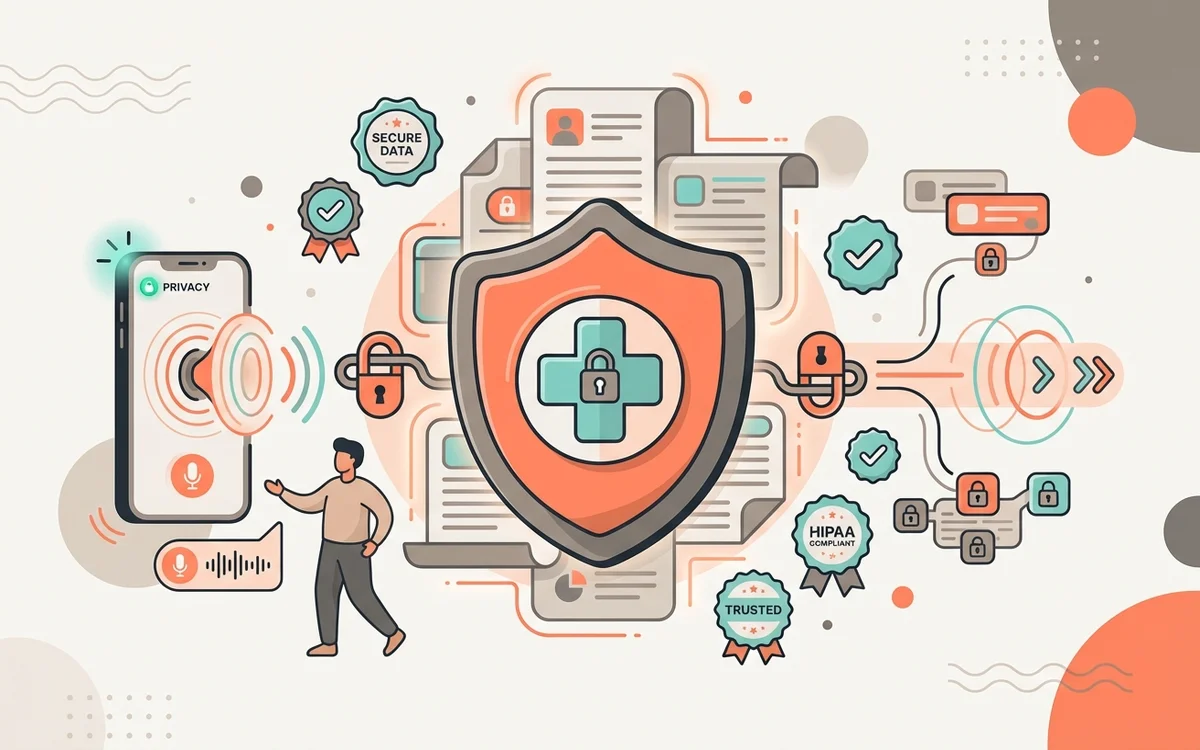
HIPAA Compliance: The Foundation of Trust in Dental AI
For any healthcare practice, especially dental offices, HIPAA compliance is not just a guideline—it’s a legal and ethical imperative. The protection of Protected Health Information (PHI) is paramount. As dental practices increasingly adopt AI-powered solutions, a critical question arises: How do AI Receptionists ensure the confidentiality and security of patient data while remaining fully compliant with HIPAA regulations?
At GetHelpdesk.ai, we understand that trust is built on security. We prioritize HIPAA compliance in every aspect of our AI Answering Assistant, providing dental practices with a powerful tool that doesn’t compromise patient privacy.
Understanding HIPAA and PHI
The Health Insurance Portability and Accountability Act (HIPAA), administered by the U.S. Department of Health and Human Services, sets national standards to protect sensitive patient health information from being disclosed without the patient’s consent or knowledge.
PHI includes any information related to a patient’s physical or mental health, healthcare provision, or payment for healthcare that can be used to identify them. This encompasses:
- Patient names and contact information
- Appointment dates and times
- Treatment plans and clinical notes
- Insurance information and billing records
- Any health-related communications
The Three HIPAA Safeguard Categories
HIPAA compliance for AI solutions requires adherence to three categories of safeguards:
Technical Safeguards: Protecting electronic PHI (ePHI) through access controls, encryption, audit controls, and integrity controls.
Administrative Safeguards: Policies and procedures to manage administrative, technical, and physical safeguards. This includes security management processes, workforce training, and ongoing evaluation.
Physical Safeguards: Protecting physical access to electronic information systems and the facilities where they are housed.
Additionally, any third-party service provider that handles PHI on behalf of a covered entity (like a dental practice) must sign a Business Associate Agreement (BAA), obligating them to comply with HIPAA.
How GetHelpdesk.ai Ensures HIPAA Compliance
Our AI Answering Assistant is built from the ground up with HIPAA compliance as a core design principle. Here’s how we ensure the utmost security and privacy for your patient data:
Robust Data Encryption
All patient data transmitted to and from our AI system is encrypted both in transit (using TLS 1.3) and at rest (using AES-256 encryption). This ensures that even if data were intercepted, it would be completely unreadable without the encryption keys.
We use the same encryption standards trusted by major financial institutions and government agencies.
Secure Hosting Environment
We utilize secure, SOC 2 Type II compliant data centers that adhere to stringent industry standards for physical and environmental security. Key features include:
- 24/7 physical security and surveillance
- Biometric access controls
- Redundant power and cooling systems
- Geographic data redundancy for disaster recovery
Access to these facilities is tightly controlled and continuously monitored.
Strict Access Controls
Access to PHI within our systems is strictly limited to authorized personnel on a need-to-know basis. Our access control framework includes:
- Multi-factor authentication for all system access
- Role-based access with least-privilege principles
- Strong password policies and regular rotation requirements
- Regular access reviews and immediate revocation for departing employees
- Detailed logging of all PHI access
Regular Security Audits and Vulnerability Assessments
We conduct frequent security audits, penetration testing, and vulnerability assessments to identify and address any potential weaknesses in our systems proactively. This includes:
- Annual third-party security audits
- Quarterly penetration testing
- Continuous automated vulnerability scanning
- Bug bounty program for responsible disclosure
Comprehensive Audit Trails
Our systems maintain detailed audit logs of all access and activity related to PHI, allowing for accountability and forensic analysis in case of a security incident. These logs include:
- Timestamp of every access
- User identification
- Type of action performed
- Data elements accessed
- IP address and device information
Audit logs are retained for the required minimum of six years and are tamper-proof.
Business Associate Agreements (BAAs)
GetHelpdesk.ai enters into legally binding Business Associate Agreements (BAAs) with all our dental practice clients. This BAA explicitly outlines:
- Our responsibilities for PHI protection
- Permitted uses and disclosures of PHI
- Breach notification procedures
- Our commitment to upholding HIPAA standards
We also maintain BAAs with our own subcontractors who may have access to PHI.
Staff Training and Awareness
Our team undergoes regular, mandatory HIPAA training to ensure they are fully aware of their responsibilities regarding patient data privacy and security best practices. This includes:
- Initial HIPAA training for all new employees
- Annual refresher training
- Role-specific security training
- Phishing awareness and social engineering prevention
Data Minimization
Our AI is designed to collect and store only the necessary PHI required for its functions, adhering to the principle of data minimization to reduce exposure. We don’t collect data “just in case”—every data element has a specific, documented purpose.
Secure PMS Integrations
When integrating with your Practice Management Software, we ensure that the integration methods are secure, compliant, and only access necessary data points. Our integrations with Open Dental, Dentrix, and Eaglesoft follow security best practices.
What Happens If There’s a Breach?
While we work diligently to prevent security incidents, HIPAA requires covered entities and business associates to have breach response procedures in place. GetHelpdesk.ai’s breach response plan includes:
- Immediate containment of the incident
- Investigation to determine scope and impact
- Notification to affected practices within 24 hours of discovery
- Collaboration on required patient and regulatory notifications
- Remediation to prevent future incidents
- Documentation of the entire response process
Your Practice’s Compliance Responsibilities
While GetHelpdesk.ai handles the technical and operational compliance on our end, dental practices should:
- Execute a BAA with GetHelpdesk.ai before implementation
- Train staff on appropriate AI usage and PHI handling
- Configure access controls appropriately within the AI dashboard
- Conduct risk assessments that include AI tools in scope
- Document AI use in your practice’s HIPAA policies
We provide guidance and support throughout this process.
Key Takeaways
- HIPAA compliance is non-negotiable for any AI tool handling patient data in healthcare settings
- Technical safeguards including encryption, access controls, and audit trails are essential
- Business Associate Agreements create legal accountability for vendors handling PHI
- GetHelpdesk.ai is built HIPAA-compliant from the ground up—it’s not an afterthought
- Ongoing vigilance through audits, training, and updates keeps security current
Frequently Asked Questions
Is GetHelpdesk.ai fully HIPAA compliant?
Yes. GetHelpdesk.ai is designed and operated to meet all HIPAA requirements for business associates handling Protected Health Information. We execute BAAs with every dental practice client and maintain the technical, administrative, and physical safeguards required by law.
What data does the AI actually access?
Our AI accesses only what’s necessary for patient communication: appointment information, basic patient demographics, and data required to answer common questions. It does not access clinical notes, treatment plans, or detailed health records unless specifically configured and necessary for your workflow.
How is voice data handled securely?
Voice calls are encrypted in transit and processed securely. Transcripts are encrypted at rest. Practices can configure retention policies based on their compliance requirements, and voice recordings can be automatically deleted after a specified period.
What certifications does GetHelpdesk.ai hold?
We maintain SOC 2 Type II compliance and conduct annual HIPAA audits through independent third-party assessors. Our infrastructure providers maintain additional certifications including HITRUST, ISO 27001, and FedRAMP.
Can I get a copy of your security documentation for my compliance records?
Absolutely. We provide BAAs, security whitepapers, and compliance documentation to all clients. Contact our team for a security package that your compliance officer or legal team can review.
What if an employee at GetHelpdesk.ai sees my patient data?
Our access controls ensure that employee access to customer PHI is extremely limited and logged. Only specific roles with legitimate business needs can access patient data, and all such access is audited. Employees receive HIPAA training and sign confidentiality agreements.
Peace of Mind for Your Practice
Adopting an AI Answering Assistant should enhance your practice’s efficiency, not introduce compliance risks. With GetHelpdesk.ai, you gain a powerful, intelligent tool that is meticulously engineered to protect your patients’ sensitive information and maintain full HIPAA compliance. This allows you to leverage the benefits of AI automation with complete peace of mind.
👉 Book a demo with GetHelpdesk.ai today. We’re happy to walk you through our security protocols and demonstrate how our AI Answering Assistant empowers your practice with intelligent automation while safeguarding patient data with the highest level of care.
Secure. Compliant. Trusted.
Related Posts
10 Signs Your Dental Practice Needs an AI Answering Service
Not sure if AI answering is right for your practice? These 10 signals — from missed calls to Monday morning voicemail backlogs — tell you the answer.
AI 101 for Dentists: A Plain-Language Guide to What It Is and What It Does
Artificial intelligence sounds complicated until you see what it actually does at a dental practice. This guide explains the concepts that matter — and skips the ones that don't.
AI Answering Service for Dental Practices: The Complete Guide
Everything dental practice owners need to know about AI answering services — how they work, what they cost, what to look for, and how they compare to traditional solutions.