
The Short Version
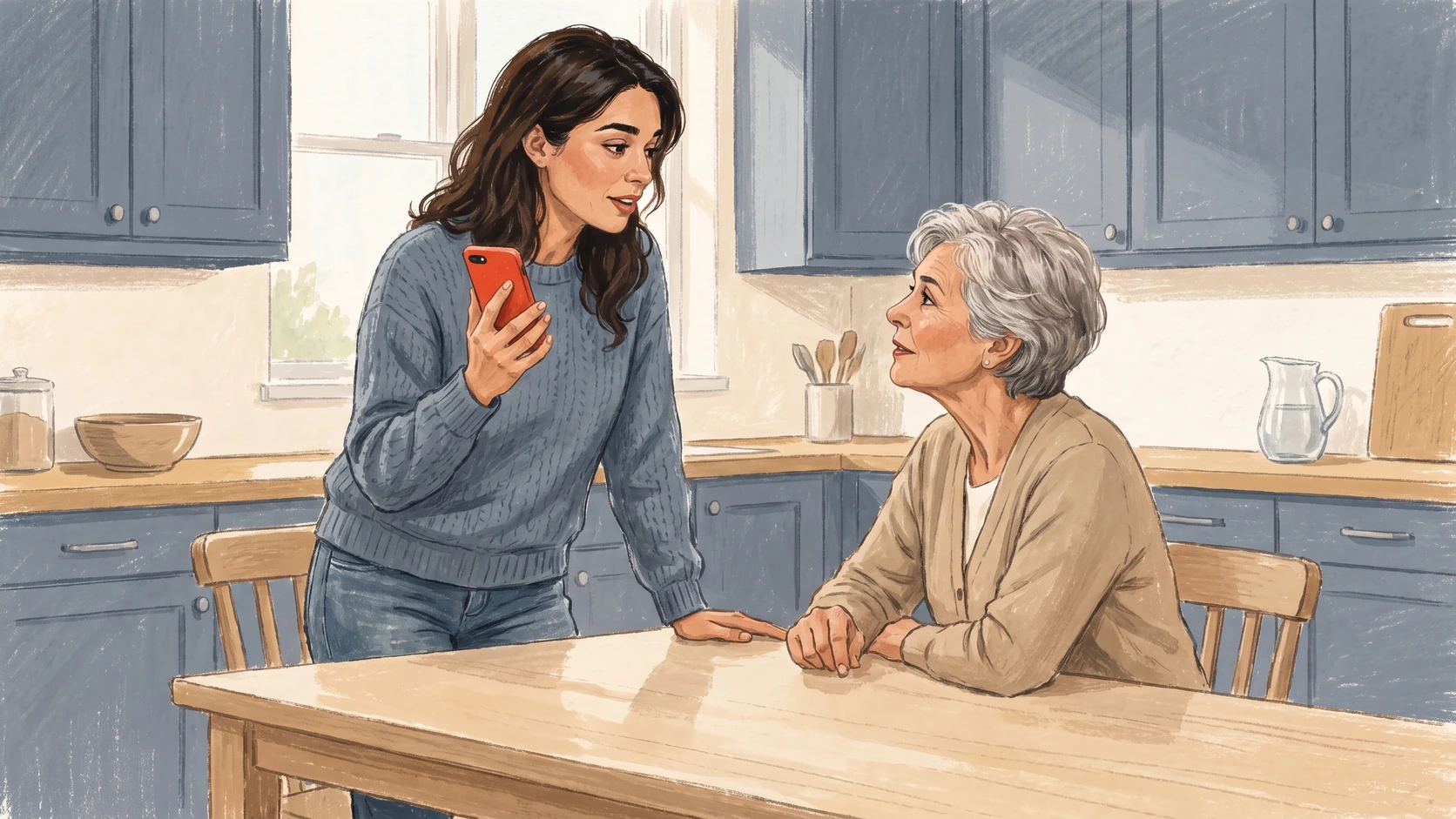
Ask most dental practices how they handle Spanish-speaking patients and you will get an honest, slightly uncomfortable answer. A daughter calls. A son fills in the forms. A neighbour comes to the appointment.
It works, in the sense that appointments get made. It is also not a language access arrangement, it is an absence of one, and federal guidance written specifically for dental offices says so in plain terms.
The part practices miss is where this gets decided. It is not in the chair, where an interpreter can be arranged in advance because you knew the patient was coming. It is on the phone, before anybody at your practice knows this patient exists, and the reason a family member is doing the translating at the appointment is usually that a family member had to do it to get the appointment at all.
Who Is Actually on the Call
Start with the scale, because practices consistently underestimate it.
The Census Bureau’s American Community Survey found that 67.8 million people in the United States spoke a language other than English at home in 2019, up from 23.1 million in 1980. Across the 2018 to 2022 period, Spanish accounted for 61.1 percent of those speakers, far ahead of any other language. Among people who speak Spanish at home, 61.0 percent reported speaking English “very well”, which leaves roughly two in five who do not.
That last figure is the one that matters for your phones. It is not a small edge case in a handful of markets. In a great many practice catchments it is a standing share of the people who would like to become patients and currently cannot get past the first sixty seconds of a phone call.
What happens instead is delegation. Somebody in the family who speaks English better makes the call. That person is frequently an adult child, sometimes a much younger one, occasionally a neighbour. They ring on their lunch break, they do not know the patient’s full history, and they are guessing at half your questions.
What the Guidance Actually Says About That Person
The American Dental Association publishes guidance for dental practices on Section 1557 of the Affordable Care Act, which prohibits discrimination on the basis of national origin in health care. The ADA explains that failure to provide meaningful access to individuals with limited English proficiency is one form of that discrimination, and that Section 1557 requires covered dental practices to take reasonable steps to ensure meaningful access. The Department of Health and Human Services encourages, but does not require, covered practices to produce a written language access plan.
Whether your practice is covered depends on whether it receives federal financial assistance, which for many dental offices turns on Medicaid participation. That is a question for your own advisor rather than for a blog, and it is worth actually answering rather than assuming.
Where it applies, the ADA sets out what the practice must not do, and this is the part that lands squarely on the family member. A covered practice must not require an individual with limited English proficiency to provide their own interpreter. It must not rely on an adult accompanying the patient to interpret, other than in narrow circumstances where the patient specifically asks for that adult, the adult agrees, and relying on them is appropriate. And it must not rely on a minor child to interpret at all, except as a temporary measure in an emergency involving an imminent threat to safety or welfare where no qualified interpreter is available. The language access requirements of the 2024 rule took effect on 5 July 2024.
The ADA also describes what language assistance has to look like where Section 1557 requires it: provided free of charge, accurate and timely, and protecting the privacy and independence of the patient. Interpreters must adhere to accepted interpreter ethics including confidentiality, have demonstrated proficiency in both languages, and interpret effectively, accurately and impartially.
Read that list back against the daughter on her lunch break. She is not free of charge to the family, she is not impartial, she has no confidentiality obligation, and the patient’s independence is the first thing that goes.
The Four Factors, and Why They Point at the Phone
The ADA notes that in assessing whether a practice has taken reasonable steps, the HHS Office for Civil Rights may weigh four factors: the number or proportion of people with limited English proficiency likely to be encountered in the service population, how frequently they come into contact with the practice, the nature and importance of the service, and the resources available to the practice and the cost.
The first two factors are usually argued from patient records. That is the wrong denominator.
Your records show who became a patient. They do not show who rang, could not be understood, and never rang back. If language is a barrier at your front door, then the people it affects most are precisely the ones missing from the records you would use to estimate how many of them there are. A practice can look at its own charts, see very few Spanish-speaking patients, and conclude reasonably and wrongly that this does not apply to it.
The honest estimate comes from your catchment rather than your chart, and the Census figures for your own county are public.
What Breaks When the Daughter Is Busy
Set the rules aside for a moment, because the operational case is just as strong.
Routing every Spanish-speaking household’s contact with your practice through one bilingual relative creates a single point of failure that has nothing to do with your office. When she is in a meeting, the call does not happen. When she moves cities, the recall reminder stops working. When the patient has a genuine problem on a Sunday evening, the decision about whether to call you is made by somebody who is not in pain and cannot see the swelling.
It also quietly distorts what you are told. An adult child summarising a parent’s symptoms is editing, usually toward reassurance. The detail that would have changed your triage is the detail that sounds alarming to say out loud about your own mother.
And it changes the appointment itself. The ADA’s guidance on working with an interpreter tells dentists to speak directly to the patient and make eye contact while speaking, to use short complete phrases, to speak in the first person, and to avoid slang, jargon and metaphors. Every one of those assumes the patient is the person being spoken to. When a family member is translating, the conversation drifts into being about the patient rather than with them, and nobody in the room quite intends it.
Bilingual Staff Count, and That Is the Point
The ADA’s description of acceptable language assistance includes the use of qualified bilingual or multilingual staff to communicate directly with patients, alongside interpretation in person or remotely by a qualified interpreter.
Direct communication is the standard being described. Not translation of a conversation, but a conversation. That is a useful thing for a practice to hold onto when deciding what to do about the phone, because it means the goal is not to arrange an interpreter faster. It is for the caller to be able to speak in their own language and be answered in it.
Whatever answers your phone should be judged on exactly that. Not whether it can greet somebody in Spanish, which almost anything can, but whether the whole call happens in Spanish: the question about whether you are taking new patients, the scheduling, the confirmation of the time, and the handover to a person if the call needs one. A greeting in Spanish followed by an English conversation is worse than answering in English, because it makes a promise in five seconds and breaks it in thirty. Where that breaks and how to test it is set out in can AI answer your Spanish-speaking patients.
What Good Sounds Like on the First Call
Five things, none of which require anybody at your practice to speak Spanish.
| The moment | What should happen |
|---|---|
| The caller speaks Spanish first | The call continues in Spanish, without being asked to hold |
| They ask if you are taking new patients | An immediate answer, in Spanish |
| They want a time | Real times offered and confirmed, in Spanish |
| The call needs a person | A handover that tells the person what language the caller is speaking |
| A reminder goes out | In the same language the appointment was booked in |
That last row is the one that gets forgotten. Booking a patient in Spanish and then sending them an English reminder hands the follow-up straight back to the family member you were trying to relieve.
Where We Stand
GetHelpdesk.AI handles more than 25 languages, detected automatically rather than selected from a menu, including English, Spanish and Vietnamese. The caller speaks, and the call continues in the language they used. There is no hold queue and no menu to navigate before that happens, and the answer comes in under a second.
The call is booked directly into the practice management system on the practice’s own rules, and it comes back to the practice as a transcript and a summary, which for this caller is worth more than usual: a front desk that does not speak Spanish still gets a readable record of what was said.
It is worth being clear about what this is and is not. Answering the phone in a patient’s language is not the same thing as a language access plan, and nothing here is legal advice about whether your practice is covered by Section 1557 or what it must do if it is. That is a conversation for your own advisor. What we would say is that a practice serious about the question usually finds the phone is the cheapest place to start, because it is the point where people are currently being turned away without anybody noticing.
Measure Your Own
There is no useful national number for this, because it is entirely a question about your catchment. Four things to find out.
- What share of households in your county speak Spanish at home, and what share of those report speaking English less than very well? The Census Bureau publishes both.
- How many of your active patients are in that group, and how does that share compare to the first number?
- On how many of your appointments does somebody other than the patient do the talking?
- Of those, how many involve a family member who is not an adult?
If the second number is much lower than the first, you are not serving a different population than your neighbours. You are losing one on the phone.
Key Takeaways
- The Census Bureau puts Spanish at 61.1 percent of people speaking a language other than English at home, and roughly two in five Spanish speakers report speaking English less than very well.
- Where Section 1557 applies, the ADA’s guidance says a covered practice must not rely on an accompanying adult to interpret except in narrow circumstances, and must not rely on a minor child except in an emergency.
- Language assistance, where required, must be free, accurate, timely, and must protect the patient’s privacy and independence.
- Patient records are the wrong place to estimate how many people this affects, because the people it affects never became patients.
- Qualified bilingual staff communicating directly is explicitly part of the standard. Direct conversation is the goal, not faster translation.
- A Spanish greeting followed by an English conversation is worse than answering in English.
- Book in the caller’s language and then remind in it too, or you have handed the follow-up back to the family.
Frequently Asked Questions
Is it ever acceptable for a family member to interpret? The ADA’s guidance describes narrow circumstances where a covered practice may rely on an accompanying adult: where the patient specifically requests that adult, the adult agrees, and relying on them is appropriate in the situation. A minor child is a different matter, permitted only as a temporary measure in an emergency involving an imminent threat where no qualified interpreter is available.
Does Section 1557 apply to our practice? It depends on whether your practice receives federal financial assistance, which often turns on Medicaid participation. It is a question for your own advisor, and worth answering explicitly rather than assuming either way.
Do we need a written language access plan? The ADA notes that HHS encourages covered dental practices to produce one but does not require it. Having one is a reasonable way to show you have taken reasonable steps, which is the standard being assessed.
We have one bilingual team member. Is that enough? It is a real asset and the guidance recognises qualified bilingual staff communicating directly as language assistance. The question is what happens on their day off, at lunchtime, and after six in the evening, because that is when a lot of these calls are made.
How do we know whether this affects us at all? Compare the share of Spanish-speaking households in your county against the share in your patient list. If your list is much lower, the gap is happening somewhere, and the phone is the most likely place.
Where to Start
Look up the language figures for your own county, then look at your active patient list, and put the two percentages next to each other.
If they do not match, the next thing to check is what a Spanish-speaking caller actually experiences when they ring you at six in the evening. What patients actually hear on an AI call walks through the call from the caller’s side, which is the only side that decides whether they book.
Related Posts
AI Receptionist for Spanish-Speaking Patients
Seven places Spanish support breaks, from detection and dental words like muela and limpieza to reminders and handoffs, plus a ten-minute test to run.
How to Handle Calls From Older Dental Patients
Older dental patients, and relatives ringing for them, need an answer with no menu, no hold queue and no callback. What to require, and four calls to test it.
Scheduling the Orthodontic Patient Journey
"I want braces" can mean a consultation, a records visit or the start. How to map the orthodontic patient journey to the right appointment types by phone.