
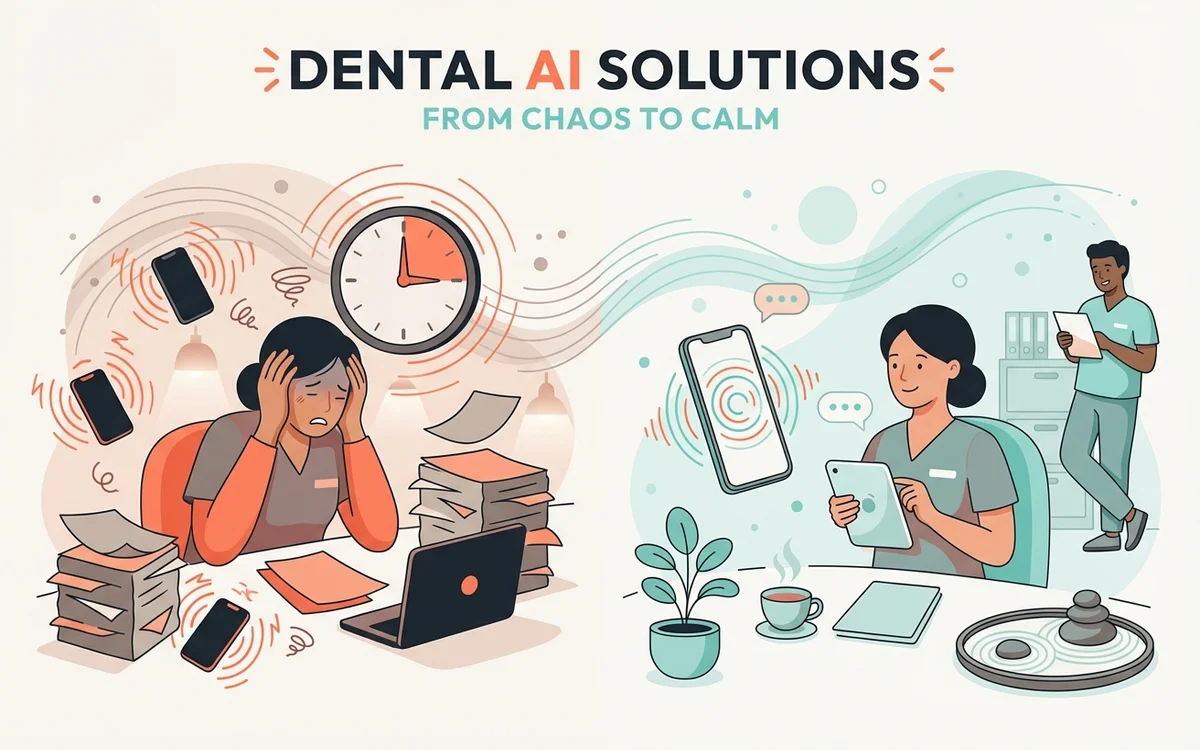
Where Front Desk Strain Comes From
Front office staff are the first point of contact for every patient and the gatekeepers of the schedule. They also absorb a lot of interruptions: the phone rings while someone is checking out at the desk, the same five questions come in all day, and a voicemail pile waits on Monday morning.
Before suggesting any fix, it helps to be clear about what the research shows. Most dental wellbeing studies have looked at dentists. The evidence on the people on the phones is thinner, and it comes with caveats.
The most direct study is a 2024 survey of dental practice managers and receptionists in the UK, published in the British Dental Journal (Knights, Batty and Mills). It had 130 respondents, using standard screening scales:
- 41% scored high on emotional exhaustion
- 22% scored high on depersonalisation, meaning detachment from patients
- 28% were above the cut-off for depressive symptoms on the two-question PHQ-2
- About 8% met the full definition of burnout, which needs high exhaustion and detachment together with a low sense of accomplishment
The authors are careful about limits. The sample was self-selecting, so the results are not representative of the whole workforce, and the study is UK-based and set against the NHS dental access crisis. Read it as a signal about an under-studied group, not as a US prevalence figure.
The stressors respondents described matter more than the percentages. They fell into three themes: rising pressure on staff, difficult relationships with patients and colleagues, and lack of recognition, including pay. Several described patients taking their frustration about waiting times out on reception.
Where the Phone Fits
Nothing in that study says the phone causes burnout, and it would be wrong to claim a phone tool fixes it. What a practice can change is the part of the job that is repetitive and interrupting, and the phone is the largest of those.
Here is what an AI receptionist like GetHelpdesk.ai can take on.
Interruptions at the desk
When a call comes in while someone is with a patient, or everyone is at lunch, the AI picks up. The phone stops competing with the person standing in front of you. It answers in under a second with no hold queue, and several callers can be answered at once.
The same questions, all day
Hours, address, directions, which insurance plans you accept. The AI answers these by phone, and the website chatbot answers the same questions from your site, with the same booking ability as the phone.
After-hours and Monday morning
Evening and weekend calls are answered and logged, with a transcript and summary for every call in the dashboard. Staff do not have to carry a mental on-call list, and Monday starts with a reviewed list of what came in rather than a stack of voicemails. The first two hours of Monday covers how to sort that list.
Confirmations and follow-ups
The same plan includes SMS follow-ups and outbound calling, so appointment confirmations and callbacks can be handled without someone dialling down a list.
Hard calls still reach people
Upset or complicated callers should go to a person. The point of a good hand-off is that the person picks up with the context, so they do not start cold. How AI hands difficult calls to your team sets out what to test before you rely on it.
What It Will Not Fix
Pay, recognition and patient anger about long waits for appointments are the other themes in that study, and software does not touch them. A calmer phone line is one input to a better job, not a wellness programme on its own.
It also matters because replacing people is expensive and slow. The American Dental Association’s Health Policy Institute reports in its Q1 2026 data that more than half of dentists who tried to recruit administrative staff found it very or extremely challenging. The US Bureau of Labor Statistics projects about 105,100 receptionist openings a year through 2035, driven by people leaving the job, with median pay of $38,010. Every departure restarts recruiting and training, which is a good reason to take the load on the people you already have seriously.
A Practical Way to Try It
- Ask your team first. Which calls interrupt them most? Which do they dread? Their answers tell you what to hand over, and involving them early makes the change theirs.
- Measure the phone. A one-week missed-call audit shows how many calls go unanswered and when, so you know whether after-hours or daytime overflow is the larger problem.
- Start with the hours nobody is in the building, then add overflow. What switching to an AI receptionist involves walks through the stages. Typical go-live is five to seven days from kickoff.
- Ask the same questions again after a month. Use a short anonymous check-in with your team and compare. Look at the Monday backlog in the dashboard too. If nothing has improved, adjust the rules or reconsider.
What It Costs
GetHelpdesk.ai is $399 a month, flat, month to month. The plan covers up to 600 inbound calls a month, outbound calling, SMS follow-ups, the website chatbot and the call dashboard. There is no per-minute charge. It is one more tool for a stretched desk, not a replacement for anyone on it, and overwhelmed front desks looks at how that plays out day to day.
Key Takeaways
- The best direct evidence on dental receptionist wellbeing is a small, self-selected UK survey: 41% scored high on emotional exhaustion, about 8% met the definition of burnout
- Respondents named workload pressure, difficult patient and colleague relationships, and lack of recognition as the causes
- An AI receptionist reduces the interruptions and repetition of the phone. It does not address pay or recognition
- Replacing front office staff is slow and difficult, so protecting the people you have matters
- Ask your team, measure the phones, start after hours, and check in again after a month
Want to See It on Your Phones?
Book a demo with GetHelpdesk.ai and we will look at your call pattern with you.
Sources
- Knights J, Batty T, Mills I and the UK Dental Team Mental Health Research and Implementation Group, Bearing the brunt: an exploration of the mental health and wellbeing of dental practice managers and receptionists in UK dental workplaces, British Dental Journal, published online 2 December 2024
- The State of the U.S. Dental Economy, 1st Quarter 2026 Update, American Dental Association Health Policy Institute
- Receptionists, Occupational Outlook Handbook, U.S. Bureau of Labor Statistics
- Pricing, GetHelpdesk.AI
Related Posts
How AI Receptionist Pricing Actually Works
Pull four numbers from last month's call log and price every quote against them. Twenty minutes that makes AI receptionist pricing comparable.
AI Receptionist Buyer's Guide for Dentists
Test two matters most: book during the call, then open your own PMS and check the appointment. Five tests, contract terms and a scorecard for dental buyers.
AI Voice Agents for Dental Practices in 2026
How a dental AI voice agent differs from voicemail, IVR, chatbots and answering services, plus five test calls and a launch checklist to run before go-live.